
Gynaecomastia Surgery: A Complete Patient’s Guide to Male Chest Contouring
Profile Clinic | Ludhiana, Punjab, India
1. What Is Gynaecomastia?
Gynaecomastia (also spelled gynecomastia) is the enlargement of breast tissue in males. It may affect one or both sides of the chest and can occur during adolescence or adulthood.
For some men, the condition causes physical discomfort. For others, the main concern is the appearance of the chest, particularly when wearing fitted clothing, swimming, exercising, or participating in activities where the chest is visible.
Gynaecomastia is a recognised medical condition and is not necessarily a sign of being overweight. It may develop because of hormonal changes, certain medications, underlying health conditions, or other factors. In some individuals, no specific cause is identified.
The good news: Suitable patients can often achieve a flatter, firmer, and more proportionate chest through individually planned gynaecomastia surgery, also known as male breast reduction or male chest contouring.
2. What Causes Gynaecomastia?
Male breast enlargement can occur for several reasons.
Hormonal changes
An imbalance between the effects of oestrogen and testosterone can stimulate the growth of male breast glandular tissue. This is relatively common during puberty and may resolve naturally in many adolescents.
Weight gain and excess fat
Fat accumulation around the chest can create a fuller or breast-like appearance. This is sometimes called pseudogynaecomastia or fatty enlargement of the male chest.
Medications and substances
Certain prescription medicines and other substances may contribute to breast enlargement. These can include some hormonal treatments, anabolic steroids and other drugs.
Patients should disclose all medications, supplements and substances they use during their consultation. Prescribed medicines should not be stopped without medical advice.
Underlying medical conditions
Certain liver, kidney, thyroid, testicular or other hormonal conditions can contribute to gynaecomastia. A medical assessment helps determine whether further investigation or treatment is needed.
Age-related changes
Gynaecomastia may also develop in adulthood or later life because of changes in hormone levels, body composition and medication use.
Important: New, rapidly developing or unexplained breast enlargement should be medically evaluated before cosmetic surgery is considered.
3. How Can You Recognise Gynaecomastia?
Common signs include:
- Enlarged or prominent male breasts.
- A firm or rubbery area of tissue beneath the nipple or areola.
- Puffy or projecting nipples.
- Excess fatty tissue around the chest.
- Uneven chest size or shape.
- Tenderness or sensitivity in some cases.
- Loose skin following significant weight loss or longstanding enlargement.
Not every enlarged male chest is caused by the same tissue. Some patients have predominantly fat, others have enlarged glandular tissue, and many have a combination of both.
This distinction is important because fat removal alone may not adequately correct firm glandular tissue beneath the nipple.
A hard or fixed lump, enlargement on one side, nipple discharge, skin changes or a lump in the armpit warrants prompt medical assessment.
4. What Is Gynaecomastia Surgery?
Gynaecomastia surgery is a procedure designed to reduce excess male breast tissue and improve the overall contour of the chest.
Depending on the patient’s anatomy, surgery may involve:
- Liposuction to remove excess fat.
- Surgical excision to remove enlarged glandular tissue.
- Liposculpture to refine the chest contour.
- Assisted liposuction technologies, where appropriate.
- Removal of excess skin in selected patients.
The objective is to create a flatter, more masculine-looking chest while maintaining natural transitions around the nipples, chest muscles and sides of the torso.
The operation is not simply about removing as much tissue as possible. Careful planning is needed to avoid an overly hollow appearance, visible depressions or an unnatural chest contour.
4. How to prceed for Gynaecomastia Surgery?
Step 1 – Call Directly 9814457148 to Book your provate consultation
Step 2 – Visit Persoally for Medical/ Clincal examintaion to be done by Dr. Vikas Gupta MCh Plastic Surgon at Profile Clinic
Step 3 – Explain your problems and discuss the details of surgery, its comlications, its results & cost as it may vary form person to person, According to his meical issue and grade of gynaecomastia.
Once you are convinced then book date of surgery & surgical technique as suggested to you.
5. Modern Gynaecomastia Surgery Techniques
There is no single technique that is best for every patient. The appropriate approach depends on the amount and type of tissue, skin elasticity, chest anatomy, the degree of enlargement and the patient’s goals.
In contemporary aesthetic surgery, including practice in the United States, surgeons use conventional liposuction, assisted liposuction technologies and gland excision in different combinations.
A. Conventional Liposuction
Liposuction uses a thin hollow tube called a cannula to remove excess fat through small incisions.
During the procedure, the surgeon moves the cannula through the fatty layer while suction removes the targeted fat.
How can it help?
- Reduces excess fatty tissue in the chest.
- Improves the transition between the chest and surrounding torso.
- Allows contouring through relatively small access incisions.
- Can be combined with gland excision when necessary.
Liposuction is particularly useful when fatty tissue contributes significantly to chest enlargement.
However, conventional liposuction does not reliably remove all firm glandular tissue. Patients with a substantial gland beneath the nipple may require direct surgical removal as well.
B. Liposculpture for Chest Definition
Liposculpture refers to the careful shaping of the body by selectively removing fat to improve its proportions and contours.
In gynaecomastia surgery, liposculpture can be used to refine the chest by reducing fullness around the breast area and creating smoother transitions towards the upper abdomen, sides of the chest and natural borders of the pectoral muscles.
The intention is not to create an identical chest shape for every patient. Instead, the surgeon works with the individual’s natural anatomy to achieve balanced results.
Potential benefits include:
- A more defined chest outline.
- Improved symmetry and proportion.
- Smoother transitions between treated and untreated areas.
- A more natural appearance beneath clothing.
Liposculpture is a contouring approach rather than a separate guarantee of a particular result. It requires careful judgement and cannot replace gland excision when significant glandular tissue is present.
C. VASER-Assisted Liposuction
VASER is a form of ultrasound-assisted liposuction. It uses ultrasound energy delivered through a specialised probe to help disrupt fat tissue before the fat is removed using suction.
The technique may be considered when the surgeon wants to facilitate fat removal and refine the chest contour, particularly in selected patients with firmer fatty tissue.
Possible advantages include:
- Assistance with fat removal in selected cases.
- Support for detailed chest contouring.
- Potential usefulness as part of a combined approach to fat removal and gland excision.
VASER does not remove every type of breast gland automatically. Firm glandular tissue may still require surgical excision, and ultrasound energy can cause thermal injury if used improperly.
VASER is therefore a tool selected according to the patient’s needs, not a universally superior replacement for conventional liposuction.
D. Laser-Assisted Liposuction
Laser-assisted liposuction uses laser energy delivered through a specialised fibre to heat and disrupt targeted fat tissue. The treated fat is then removed, usually by suction.
Some laser systems are also intended to produce controlled heating of tissues, which may contribute to skin contraction in selected circumstances.
In male chest contouring, laser-assisted liposuction may be considered when its specific characteristics are appropriate for the patient’s anatomy and the surgeon’s treatment plan.
What should patients know?
- Laser-assisted liposuction is different from VASER, which uses ultrasound energy.
- Laser treatment does not guarantee skin tightening.
- It does not eliminate the need for gland excision when indicated.
- Excessive or poorly controlled heat can cause burns, tissue injury and contour problems.
The potential advantages and limitations should be discussed before choosing this technique.
E. PAL — Power-Assisted Liposuction
PAL stands for Power-Assisted Liposuction.
It uses a motor-driven cannula that moves rapidly in small, controlled oscillations to assist the surgeon in removing fat. Unlike VASER and laser-assisted systems, PAL does not rely on ultrasound or laser energy to achieve its primary effect.
Potential advantages include:
- Assistance with efficient fat removal.
- Greater ease of cannula movement in selected tissues.
- Support for controlled contouring over broader areas.
- Reduced physical effort for the surgeon during fat removal.
PAL may be used as part of a gynaecomastia procedure when the surgeon considers it appropriate.
However, PAL does not automatically produce better results than other methods. Technique, anatomical understanding, appropriate patient selection and surgical experience remain essential.
F. Gland Excision: Removing Firm Breast Tissue
Gland excision is an important component of many gynaecomastia operations.
When firm breast glandular tissue is responsible for nipple projection or chest fullness, the surgeon may remove the excess tissue through a small incision, often placed along the lower border of the areola.
This approach may be combined with liposuction or an assisted liposuction technique to smooth the surrounding area.
The amount of gland removed must be carefully judged. Removing too little may leave persistent fullness, while removing too much can create a depression beneath the nipple.
The goal is a balanced contour, not simply maximum tissue removal.
G. Skin Excision for Advanced Gynaecomastia
Some patients have significant loose skin, particularly after substantial weight loss or in longstanding, more severe gynaecomastia.
In such cases, liposuction and gland removal alone may not adequately address the excess skin.
Additional skin-removal procedures may be considered. These can require longer incisions and more visible scars, depending on the extent of correction required.
The surgeon should explain the likely scar pattern, recovery and expected benefits before surgery.
6. Which Technique Is Best for You?
Your surgeon may recommend one technique or a combination of approaches.
| Chest condition | Possible surgical approach |
|---|---|
| Predominantly fatty chest enlargement | Liposuction |
| Firm glandular tissue beneath the nipple | Gland excision, sometimes with liposuction |
| Combination of fat and gland | Liposuction plus gland excision |
| Need for detailed chest contouring | Liposculpture with an appropriate fat-removal technique |
| Selected patients suitable for ultrasound-assisted fat removal | VASER-assisted liposuction |
| Selected patients suitable for laser-assisted treatment | Laser-assisted liposuction |
| Cases where powered fat removal is useful | PAL |
| Significant loose skin | Skin excision, sometimes combined with other techniques |
These approaches are not mutually exclusive. For example, a surgeon may use PAL or VASER to remove and contour fat, then remove a firm gland through a small incision.
The choice should be based on clinical assessment rather than the name of a machine alone.
7. What Is the Difference Between Fat and Glandular Tissue?
Understanding this difference helps explain why some men need more than liposuction.
Fatty tissue generally feels softer and may increase with weight gain. It can often be reduced with liposuction.
Glandular tissue tends to feel firmer and may form a disc-like area beneath the nipple. It often requires direct excision for adequate correction.
Mixed gynaecomastia contains both fat and glandular tissue. This is why a combined procedure may be appropriate.
A physical examination is usually central to the assessment. Depending on the findings, the surgeon may recommend blood tests, imaging or other investigations to identify the cause and guide treatment.
8. Who Is a Suitable Candidate for Gynaecomastia Surgery?
You may be considered for surgery if you:
- Have persistent breast enlargement that concerns you.
- Are in reasonably good general health.
- Have realistic expectations about the outcome.
- Have stable body weight or are working towards a suitable weight.
- Understand the potential benefits, risks, scars and recovery.
- Can follow the surgeon’s postoperative instructions.
Patients with significant untreated medical causes may need evaluation or treatment before proceeding.
Adolescents require special consideration because pubertal gynaecomastia often improves naturally. Surgery is generally considered only after an appropriate assessment of age, persistence, underlying causes and individual circumstances.
Gynaecomastia surgery is not a weight-loss procedure. Patients with substantial excess weight may benefit from a personalised weight-management plan before surgery.
9. How Is Gynaecomastia Surgery Performed?
The exact procedure depends on the planned treatment, but the process generally involves the following stages.
Step 1: Consultation and assessment
The surgeon reviews your medical history, medications, previous treatments, chest concerns and desired outcome.
The examination assesses the amount of fat, glandular tissue, skin excess, nipple position and chest symmetry.
Step 2: Personalised surgical planning
Based on the findings, the surgeon decides whether liposuction, gland excision, assisted liposuction, skin removal or a combination is appropriate.
Photographs and preoperative markings may be used to plan the treatment.
Step 3: Anaesthesia and preparation
The procedure may be performed under general anaesthesia or an appropriate local anaesthesia and sedation plan, depending on the case and clinical setting.
The team follows appropriate preoperative checks and safety protocols.
Step 4: Fat removal and contouring
Small incisions are made to introduce the selected liposuction cannula. The surgeon removes targeted fat while assessing the contour and symmetry of the chest.
If an assisted technique is used, it is incorporated according to the surgical plan.
Step 5: Gland removal, if required
Firm excess glandular tissue is removed through an appropriately placed incision. The surgeon carefully balances tissue removal with support for a smooth, natural-looking contour.
Step 6: Closure and compression
The incisions are closed or dressed as appropriate. A compression garment may be applied to help support the treated area and manage swelling.
The patient is then monitored according to the anaesthesia plan and postoperative care requirements.
10. International Standards and Patient Safety
Modern gynaecomastia surgery draws on established principles of plastic surgery used internationally, including in the United States.
These principles include:
- Appropriate medical evaluation before elective surgery.
- Selection of a qualified and appropriately trained surgeon.
- A properly equipped and legally authorised surgical facility.
- Suitable anaesthesia assessment and monitoring.
- Sterile surgical technique and infection-prevention measures.
- Appropriate selection and use of medical devices.
- Clear discussion of benefits, limitations, alternatives and risks.
- Planned postoperative care and access to medical assistance.
VASER, laser-assisted liposuction and PAL are different technologies with different mechanisms of action. The availability of a particular device does not, by itself, establish that a clinic or procedure meets an international standard.
Patients should ask about the surgeon’s qualifications, experience with gynaecomastia, the device being used, its regulatory status in the relevant jurisdiction and the facility’s safety arrangements.
No surgical technique can guarantee a perfectly symmetrical chest, scar-free healing or a complication-free outcome.
11. Benefits of Gynaecomastia Surgery
For appropriately selected patients, surgery may offer:
- Reduced breast prominence.
- A flatter and more proportionate chest.
- Improved chest definition.
- Better fit in shirts and other clothing.
- Reduced discomfort caused by excess tissue in selected cases.
- Greater confidence in situations where chest appearance has been a concern.
Results vary according to the original anatomy, skin quality, extent of enlargement, surgical technique and healing response.
Surgery can improve chest shape, but it cannot guarantee a particular emotional, social or psychological outcome.
12. Risks and Possible Complications
Gynaecomastia surgery is a commonly performed procedure, but it is still surgery and carries risks.
Possible complications include:
- Bleeding or a collection of blood beneath the skin (haematoma).
- Fluid accumulation (seroma).
- Infection.
- Swelling, bruising and postoperative pain.
- Temporary or, less commonly, persistent changes in nipple sensation.
- Unevenness or asymmetry.
- Visible contour irregularities, dents or depressions.
- Persistent fullness or under-correction.
- Excessive tissue removal or an unnatural contour.
- Skin or nipple healing problems.
- Burns or thermal injury associated with energy-based devices.
- Scarring or changes in skin pigmentation.
- Anaesthesia-related complications.
- Blood clots and other uncommon but serious complications.
- The possibility of revision surgery.
The specific risks depend on the procedure, the patient’s health and the techniques used. Your surgeon should discuss these risks and how they are managed before you provide informed consent.
13. Recovery After Gynaecomastia Surgery
Recovery varies from person to person. The extent of tissue removal, use of gland excision, skin removal, anaesthesia and individual healing all influence the recovery period.
The first few days
Mild to moderate pain, bruising, swelling and tightness are common. Take prescribed medication as directed and follow the instructions for dressings, bathing and wound care.
A compression garment may be recommended for a specified period.
The first one to two weeks
Many patients gradually resume light daily activities as comfort permits. Return to work depends on the nature of the job and the extent of surgery.
Avoid strenuous exercise, heavy lifting and vigorous chest movements until your surgeon confirms that these activities are safe.
The following weeks
Swelling gradually subsides and the chest contour becomes easier to assess. Residual swelling and firmness may persist for several weeks or longer.
Patients who undergo more extensive surgery, particularly skin excision, may require a longer recovery.
Final results
The chest shape generally improves progressively as swelling resolves and the tissues settle. The final result may take several months to become apparent.
Attend follow-up appointments so the surgeon can assess healing and advise when to resume normal activities.
Seek urgent medical attention for severe or rapidly increasing swelling, uncontrolled bleeding, fever with worsening redness, chest pain, shortness of breath or other concerning symptoms.
14. Will Gynaecomastia Come Back After Surgery?
Surgery can provide a long-lasting improvement when the underlying cause is appropriately assessed and the excess tissue is adequately treated.
However, future changes remain possible. Significant weight gain may increase chest fat, hormonal disturbances may contribute to renewed breast tissue growth, and certain medications or substances may affect the chest.
Maintaining a stable weight, following medical advice and addressing relevant underlying causes can help preserve the result.
15. Can Exercise or Diet Cure Gynaecomastia?
Exercise and healthy eating can help reduce excess body fat and improve overall fitness. Strength training may also improve the appearance of the underlying chest muscles.
However, exercise does not reliably eliminate established glandular breast tissue.
If the enlargement is predominantly fatty, weight management may improve the appearance. If firm glandular tissue remains, surgical assessment may be appropriate.
The correct approach depends on whether the enlargement is caused by fat, glandular tissue or a combination of both.
16. Frequently Asked Questions
Is gynaecomastia surgery safe?
It can be performed safely in appropriately selected patients by a qualified surgeon in a suitable surgical facility. All operations carry risks, and individual safety depends on medical assessment, surgical planning, anaesthesia and postoperative care.
Does gynaecomastia surgery leave scars?
Yes. Liposuction requires small access incisions, and gland excision may require an incision around part of the areola. Additional skin-removal surgery may involve longer scars. Scars usually mature over time, but their appearance varies.
Is VASER better than conventional liposuction?
Not for every patient. VASER uses ultrasound energy to assist fat removal, while conventional liposuction mechanically removes fat using suction. The most appropriate method depends on the patient’s anatomy and the surgeon’s assessment.
Is laser-assisted liposuction better than VASER?
They use different technologies. Laser-assisted liposuction uses laser energy, whereas VASER uses ultrasound energy. Neither is universally superior, and both have specific benefits, limitations and risks.
What is the advantage of PAL?
PAL uses a powered, oscillating cannula to assist fat removal. It may improve procedural efficiency in selected cases, but it does not guarantee better aesthetic results.
Can gynaecomastia be treated with liposuction alone?
Sometimes. Liposuction may be sufficient when enlargement is predominantly caused by fat. Firm glandular tissue or excess skin may require additional surgery.
Can both sides be treated in one operation?
Yes, bilateral treatment is common. The procedure is planned to address differences between the two sides, although perfect symmetry cannot be guaranteed.
How long does the operation take?
Operating time varies according to the degree of enlargement, the techniques used, whether gland excision is required and whether excess skin must be removed. Your surgeon can provide an estimate after examining you.
When can I return to the gym?
Light activities may resume earlier than strenuous exercise. Chest training, heavy lifting and vigorous workouts should be restarted only when your surgeon confirms that healing is adequate.
Will the result be permanent?
The improvement can be long-lasting, but future changes in weight, hormones or medication use may affect the chest.
Is surgery possible after significant weight loss?
Yes, in selected patients. If substantial skin excess remains, skin-removal surgery may be needed in addition to fat and gland removal.
Does gynaecomastia surgery treat the underlying hormonal cause?
Surgery corrects excess tissue and improves chest contour. It does not necessarily treat the underlying hormonal or medical cause, which may require separate evaluation and management.
17. Choosing the Right Surgeon for Gynaecomastia
Choosing a surgeon is as important as choosing a technique.
Before proceeding, consider asking:
- What are my chest enlargement’s likely causes?
- Do I need liposuction, gland excision or both?
- Which technique do you recommend for my anatomy, and why?
- What are the likely scars and recovery requirements?
- What complications should I understand?
- Where will my surgery be performed, and what safety arrangements are available?
- What follow-up care will I receive?
- What results are realistic in my particular case?
An experienced surgeon should explain the reasoning behind the proposed plan, including when a simpler technique may be sufficient and when additional treatment may be needed.
18. Gynaecomastia Surgery at Profile Cosmetic Clinic, Ludhiana
At Profile Cosmetic Clinic, the aim of male chest contouring is to address the patient’s individual concerns through careful assessment, appropriate surgical planning and attention to natural chest proportions.
The treatment plan may include conventional liposuction, liposculpture, VASER-assisted liposuction, laser-assisted liposuction, PAL or surgical gland excision, depending on the patient’s condition and the techniques clinically appropriate for the case.
The priority is not simply to use the most advanced-sounding device. It is to choose the right combination of methods to address the underlying tissue, minimise avoidable risks and achieve a balanced contour.
A consultation allows the surgeon to assess the chest, discuss relevant medical factors, explain the available approaches and outline expected recovery.
Considering gynaecomastia surgery? Arrange a consultation to understand your options and receive an individualised assessment.
Profile Cosmetic Clinic
1753 New Prem Nagar, Near Hathi Complex, Ludhiana, Punjab
Phone: 9814457148
Website: https://www.profilecosmeticsurgery.com/
Medical Disclaimer
This article is intended for general educational purposes and does not replace a consultation, diagnosis or personalised medical advice. The suitability of gynaecomastia surgery and the choice of surgical technique must be determined by a qualified medical professional after an appropriate assessment. Results and recovery vary between patients.
Suggested Further Reading
- American Society of Plastic Surgeons (ASPS): Gynaecomastia Surgery — Risks and Safety.
- American Society of Plastic Surgeons (ASPS): Assisted Liposuction — Procedure and Patient Safety.
- US Food and Drug Administration (FDA): Medical Lasers and Aesthetic Device Safety.

If you have lots of fatty tissue
in the breast region then it can be treated with proper exercise and balanced diet. This condition is known as Pseudogynaecomastia.
Dr.Vikas Gupta: On the other hand, if your nipples have enlarged, it indicates the glands inside your breast have also increased in size. In this case exercise won’t be sufficient to decrease the size, the patient will have to go through liposuction and breast reduction surgery.
Am I an ideal candidate for male breast reduction?
- Within your ideal body weight.
- Healthy and emotionally stable.
- Affected by gynaecomastia on one or both breasts.
- Over 18 years old.
- Have good skin elasticity.
- Unhealthy or have serious medical conditions.
- Unrealistic about what to expect.
- Have been using drugs.
Some major surgical methods used to treat gynecomastia include:-

The Webster Incision is one of the most common methods and is very simple. In the procedure, the doctor marks an incision right below the nipple (areola) in the dark skin, only in the lower half and starts the procedure.
The Minimally Invasive Method: In this specific method a very tiny incision is made at the side of the nipple. The incision is about 5mm in size and from it excess glandular tissues are sucked out, followed by liposuction. The main advantage of this procedure is smaller & less visible incision.
Ultrasonic Liposuction Method: Ultrasound is used to treat the increased breasts if the glandular is not the cause behind it. This method proposes less chances of nipple distortion. Most of the time we do the procedure under local anaesthesia.
Recovery
After the male breast reduction patients can sometimes feel discomfort in chest area. Pain killers and other medications are suggested by our surgeons that will help to ease the pain to a great extent. Common side effects are-
- Bruising
- Swelling
- Temporary numbness
- Most of the side effects will disappear after a week or two.
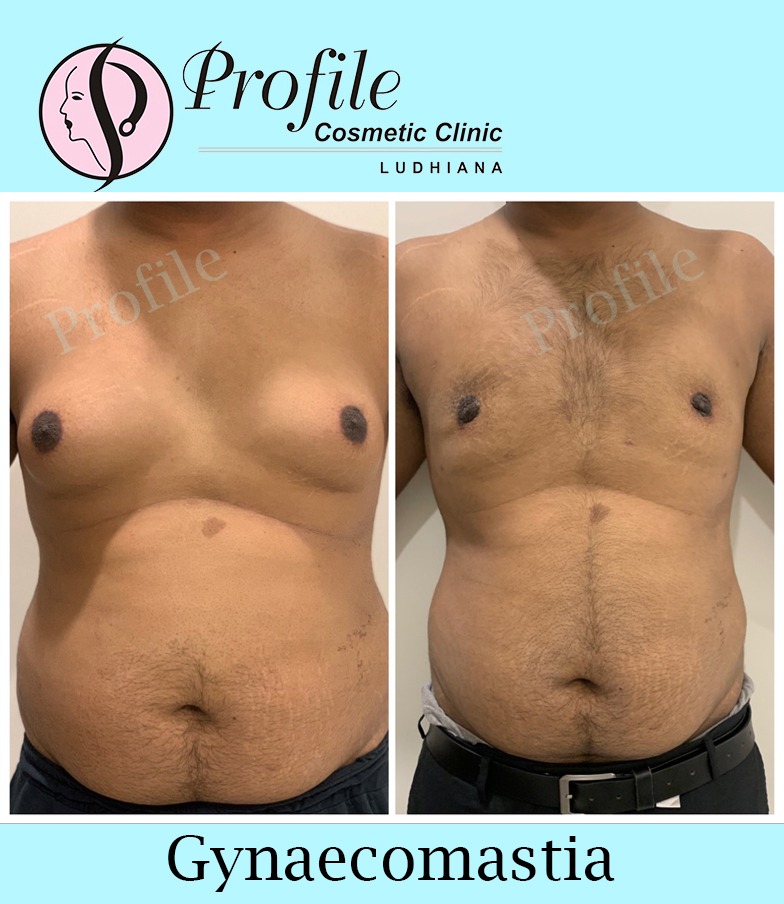
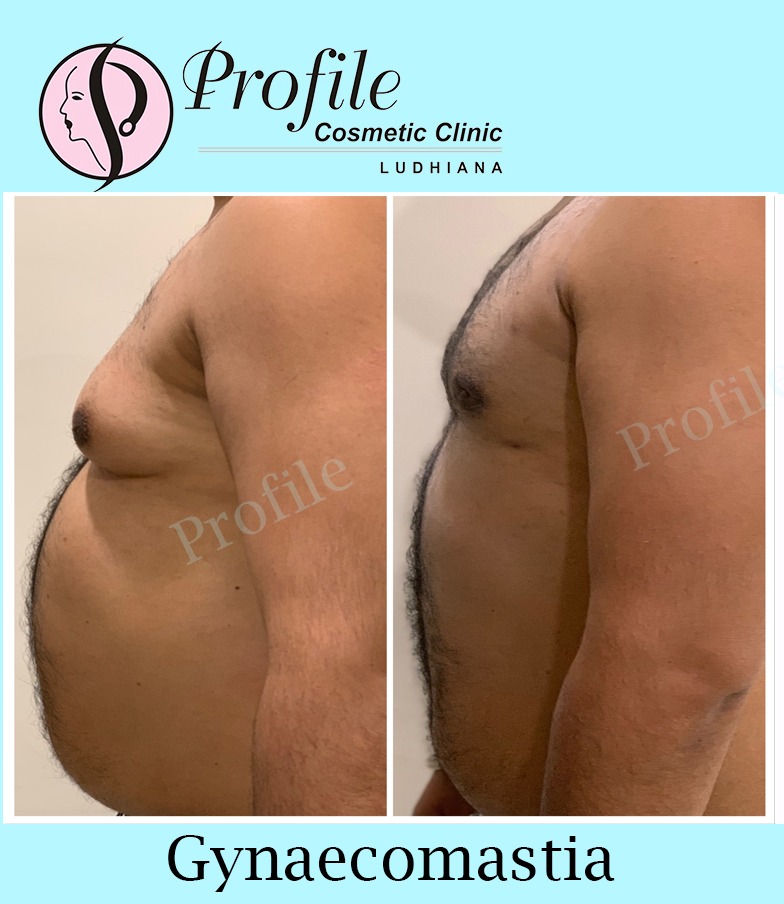
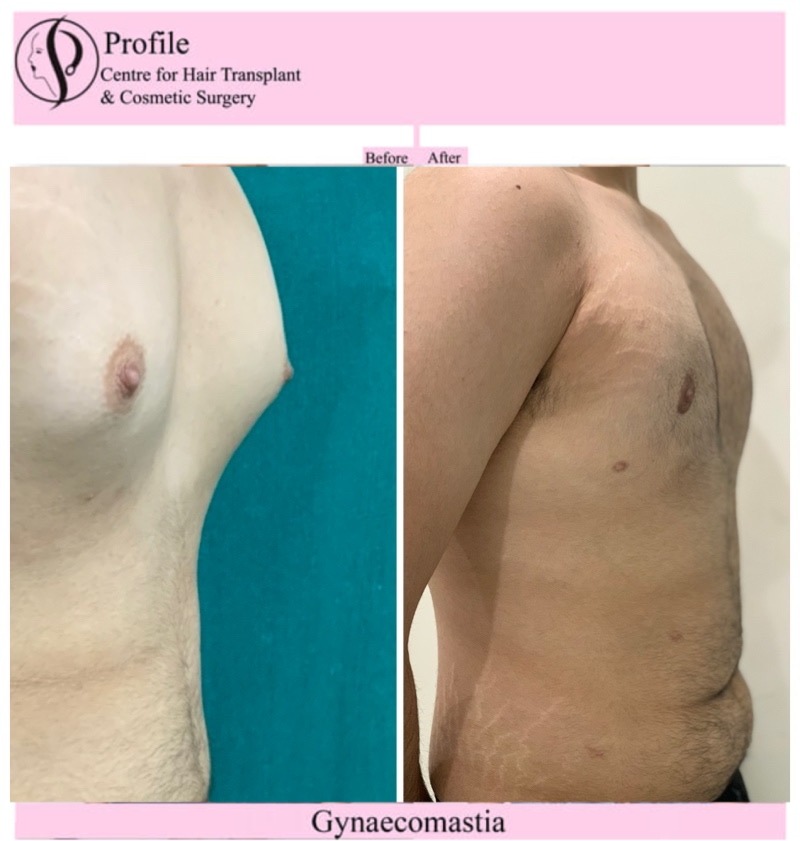
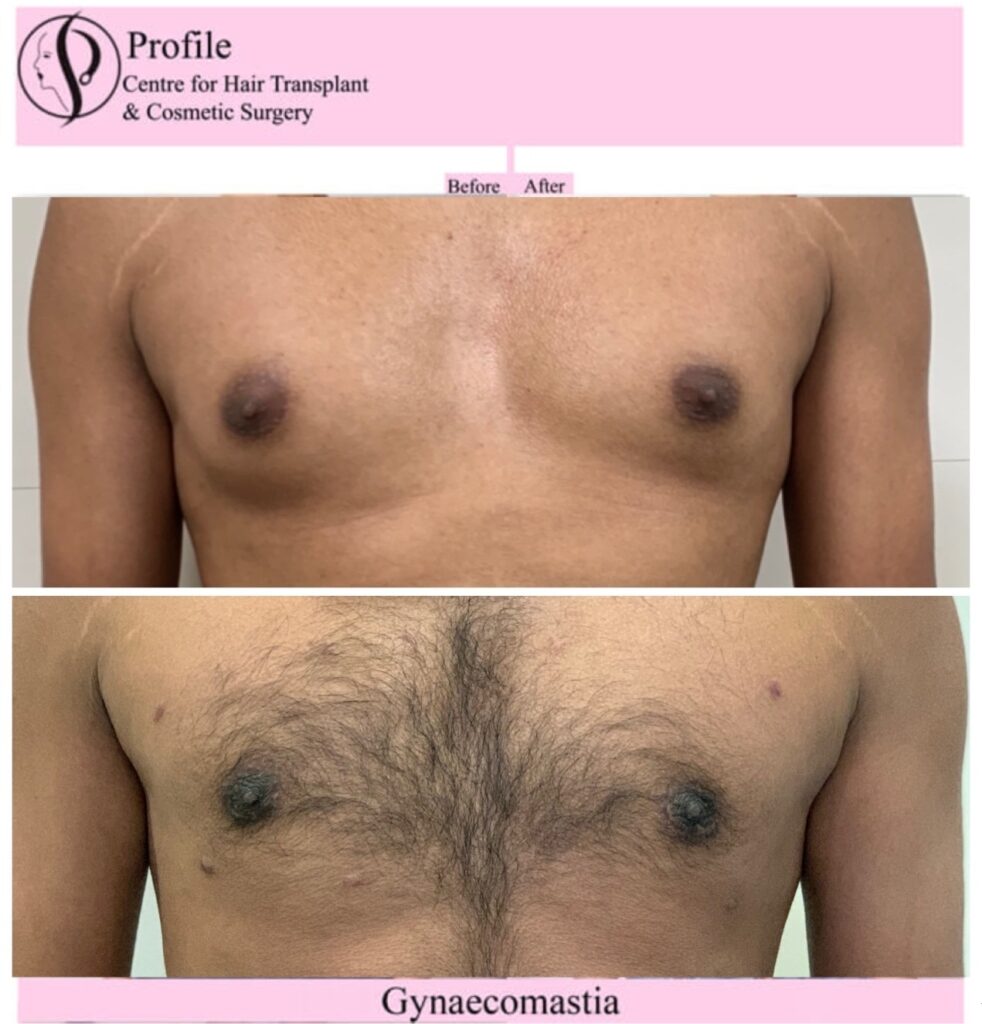
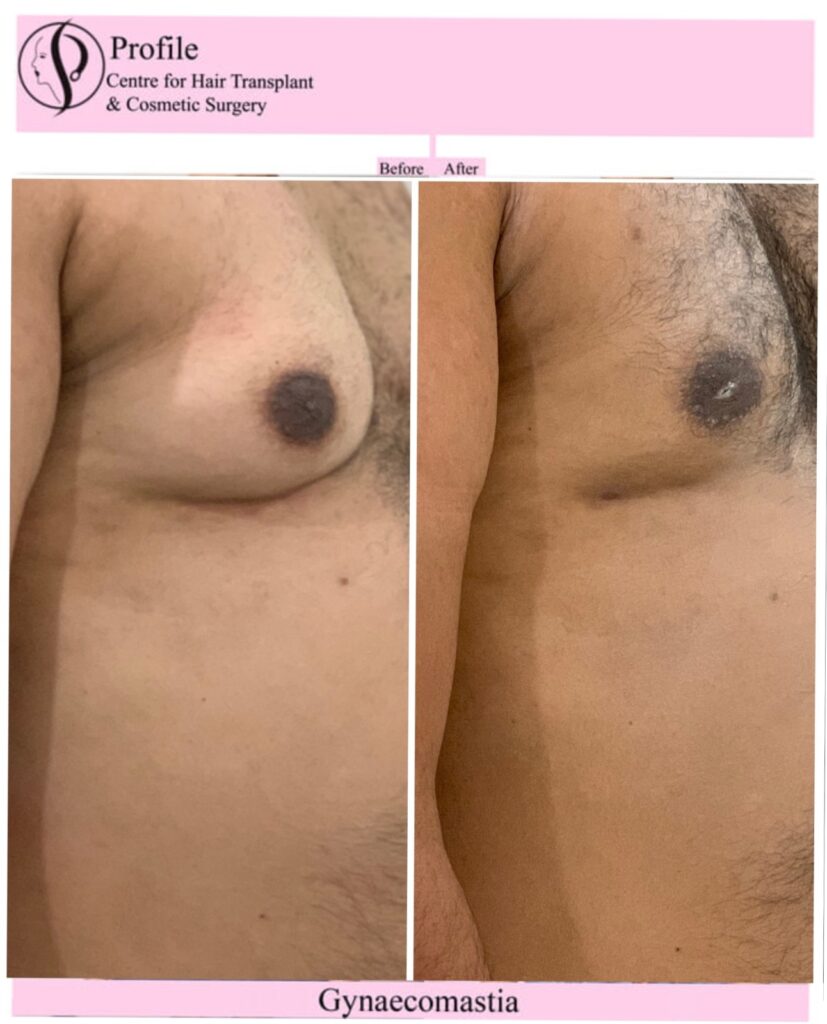
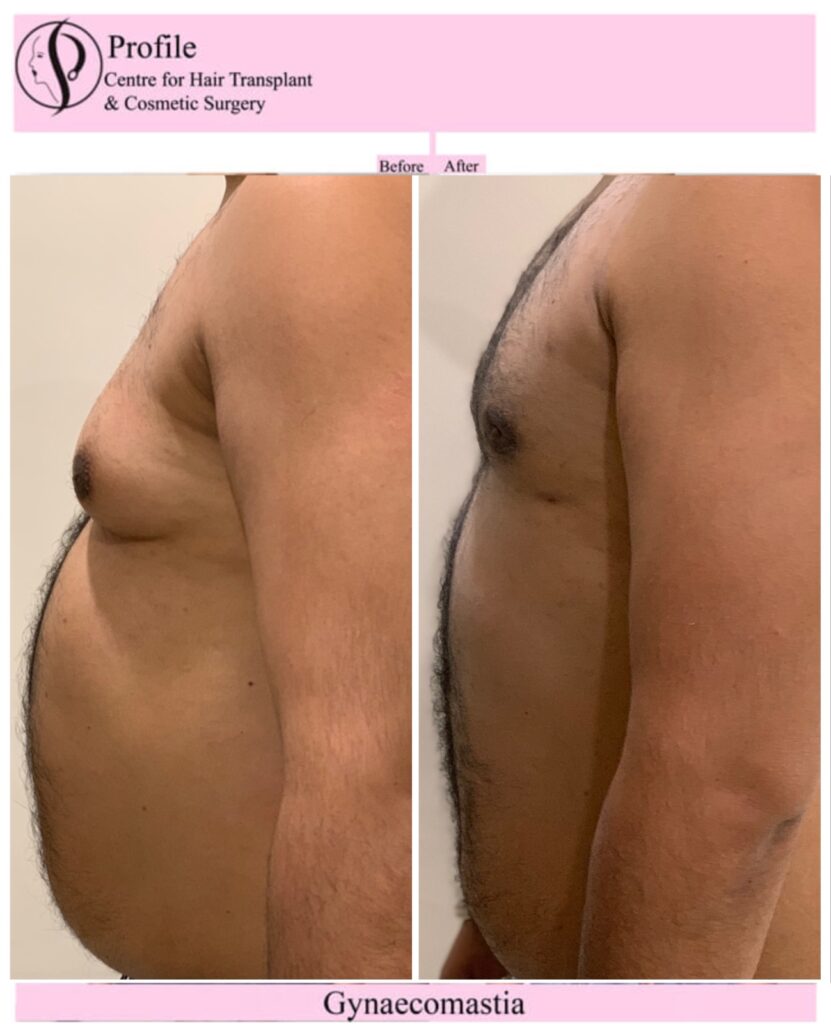
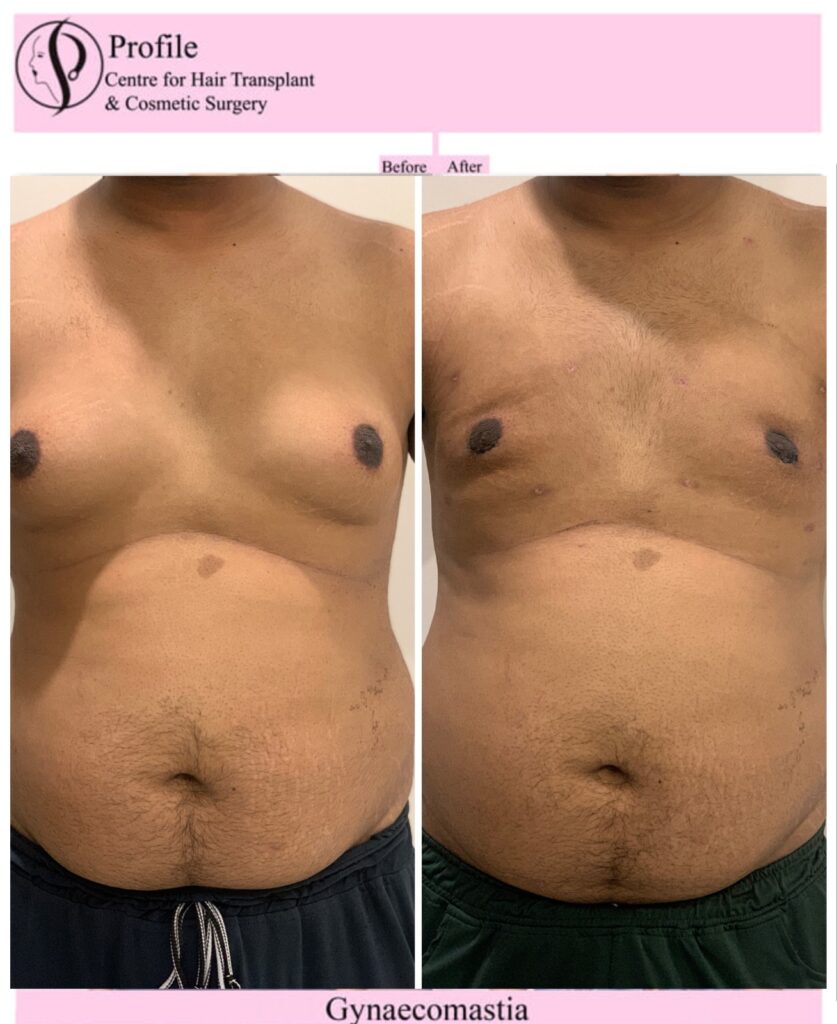
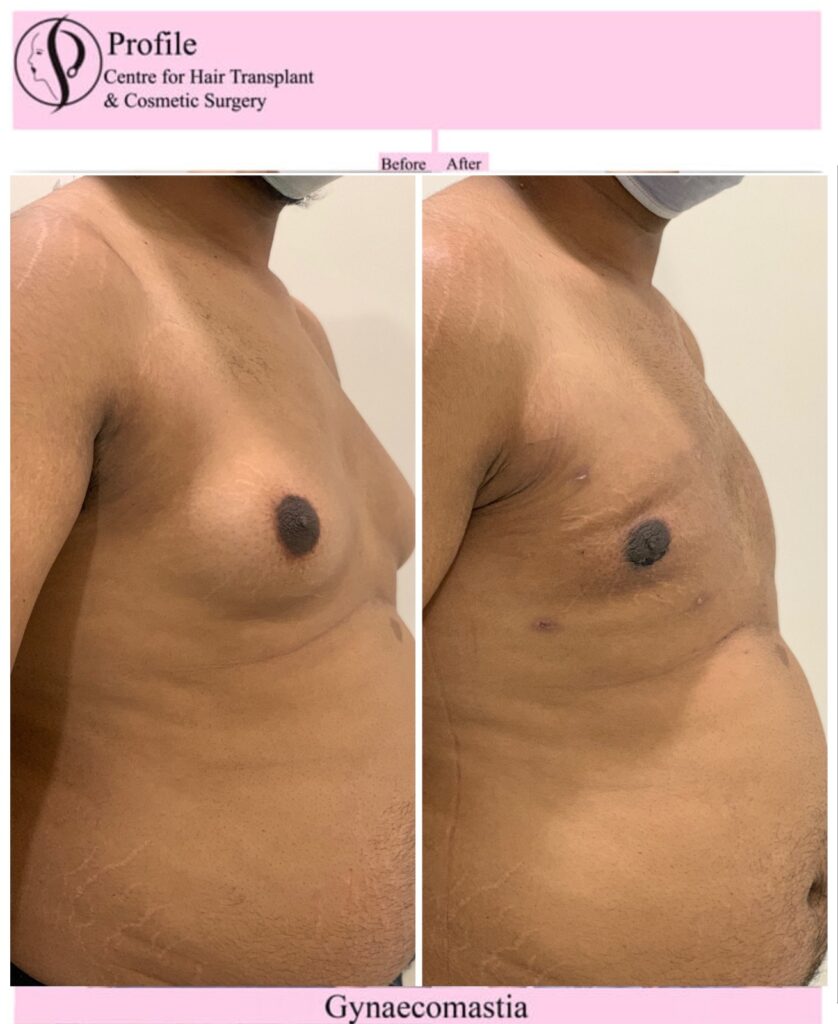
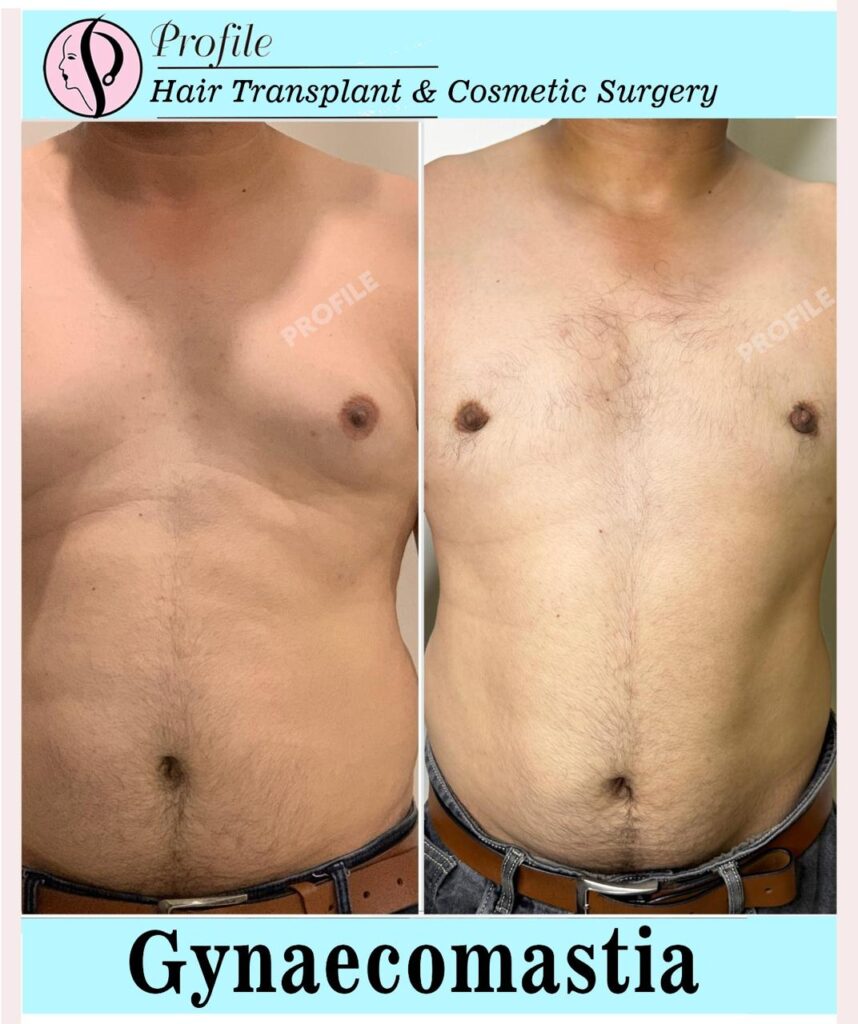
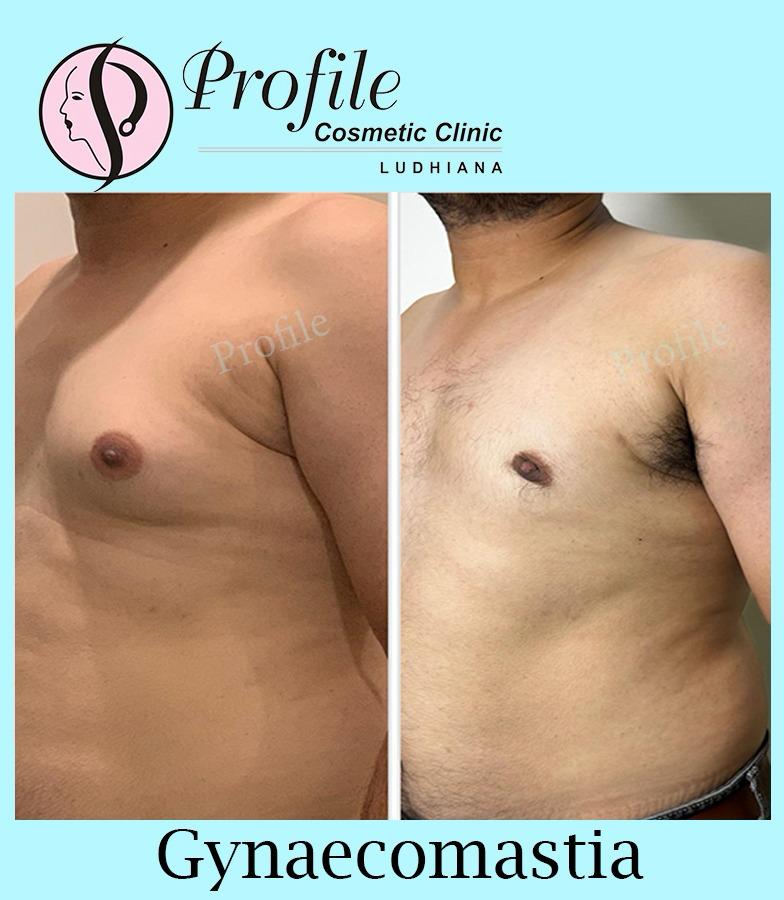
Gallery
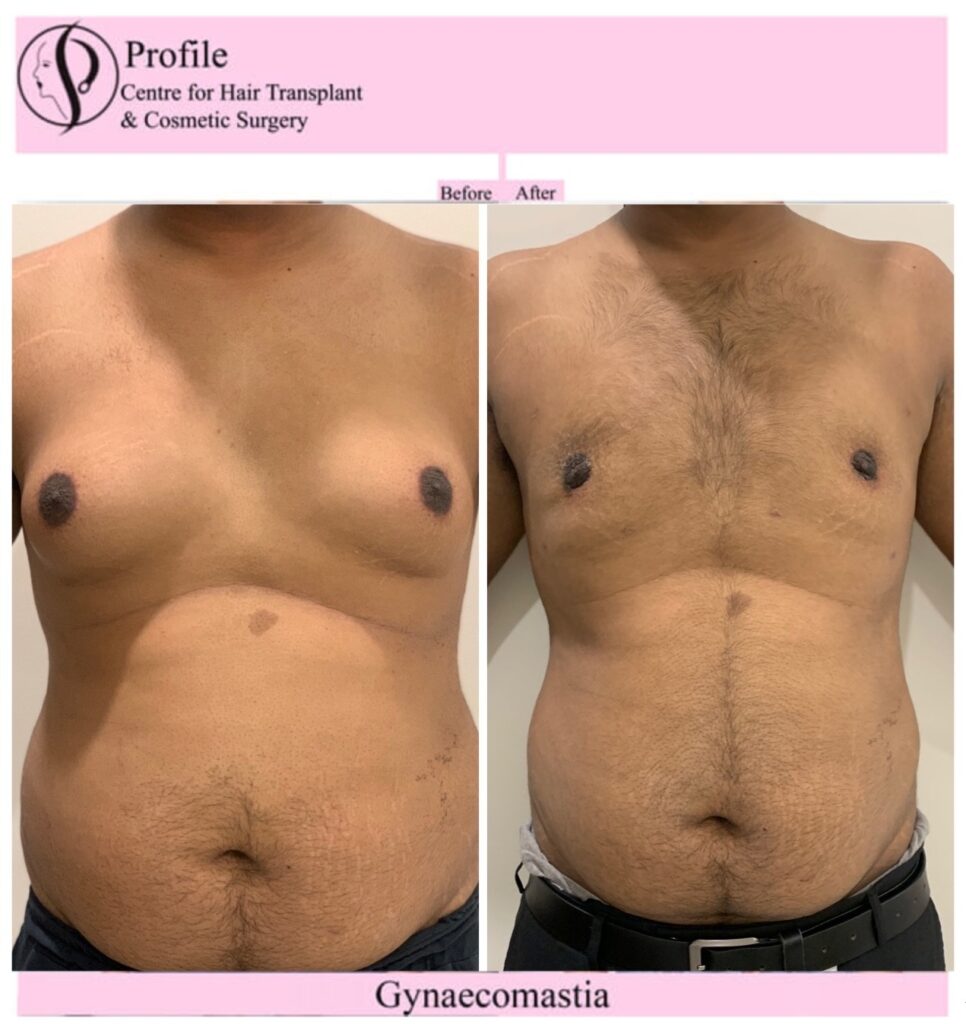
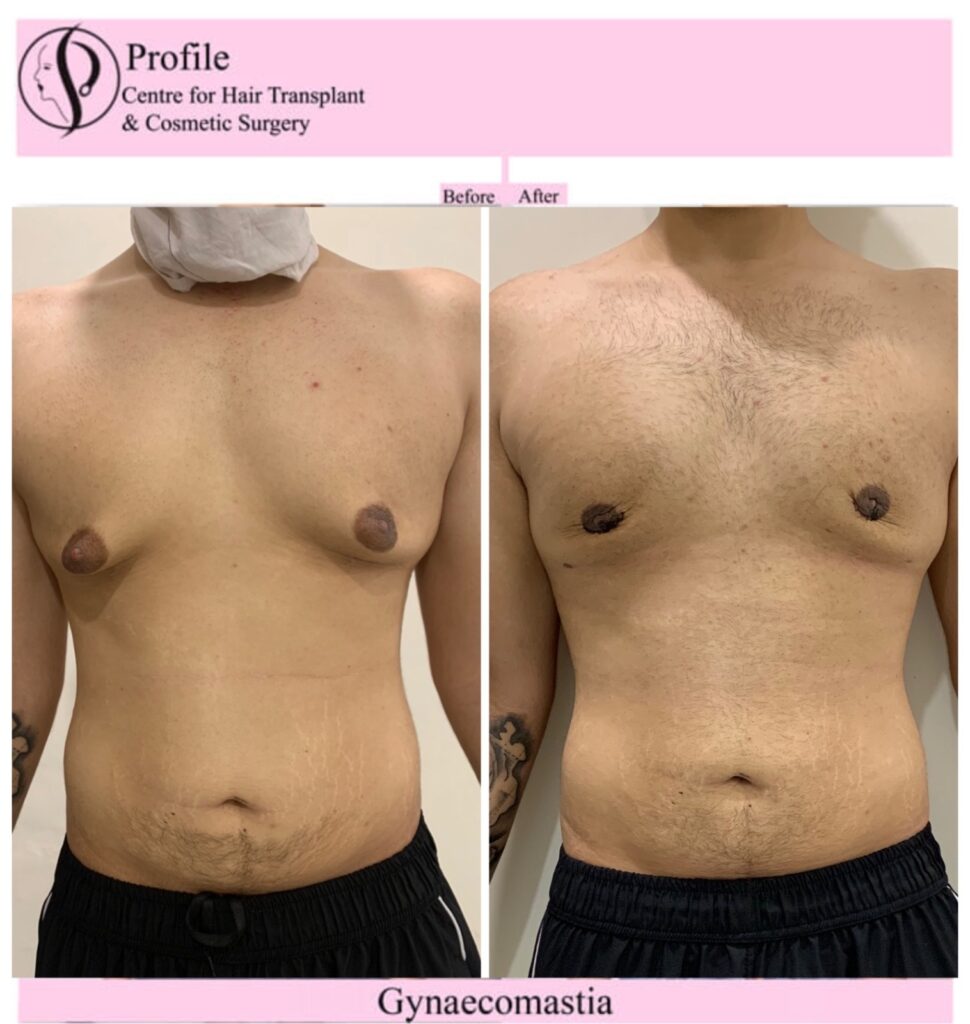
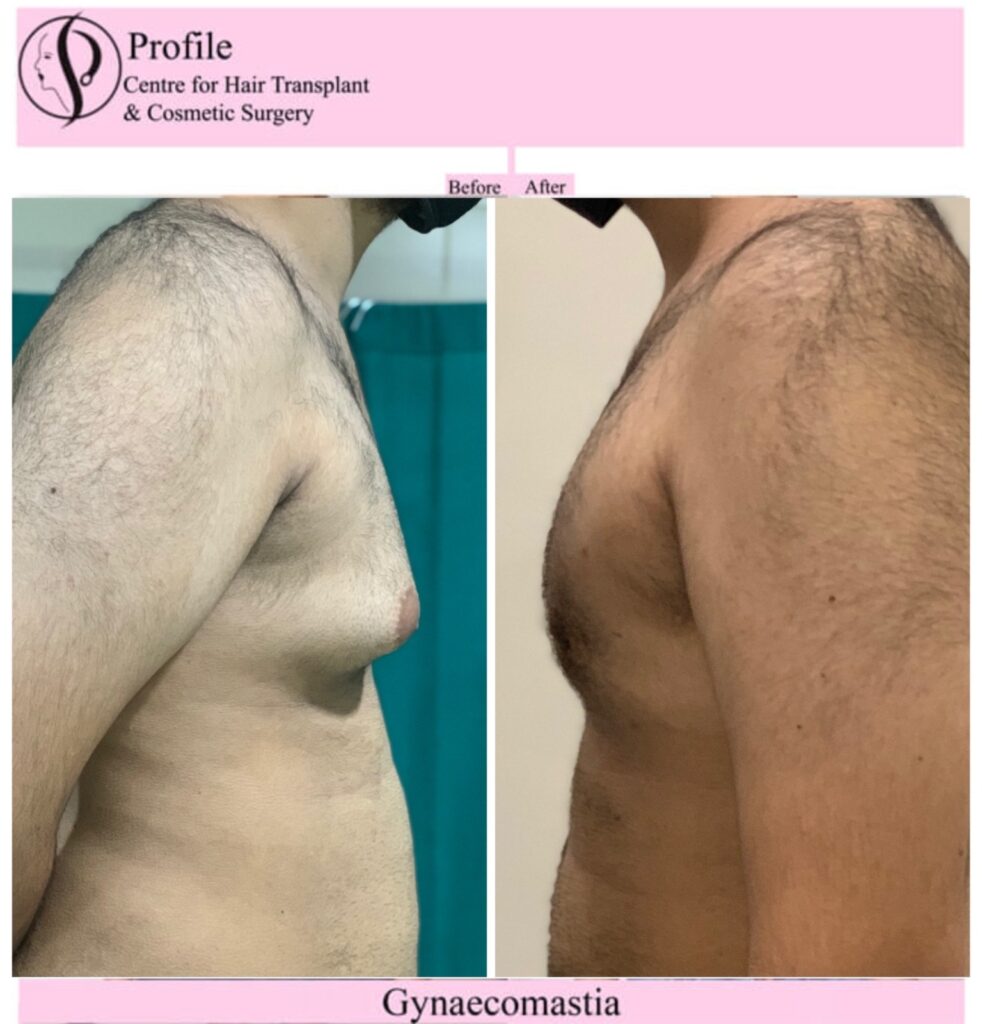
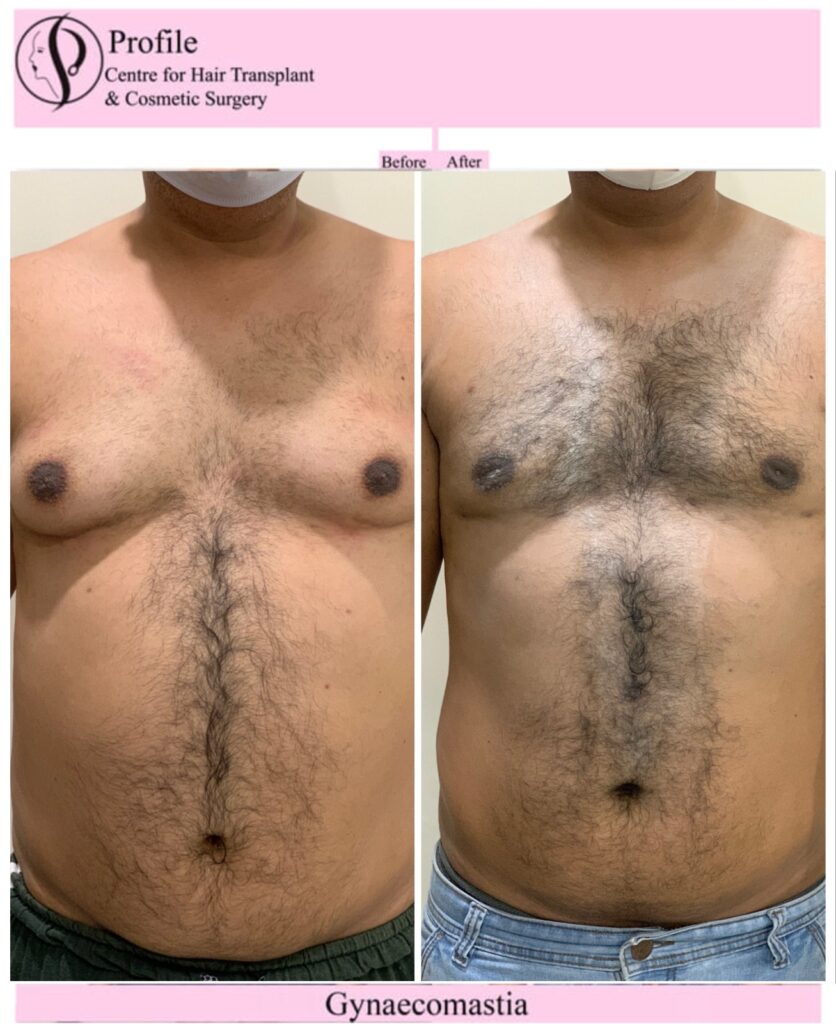
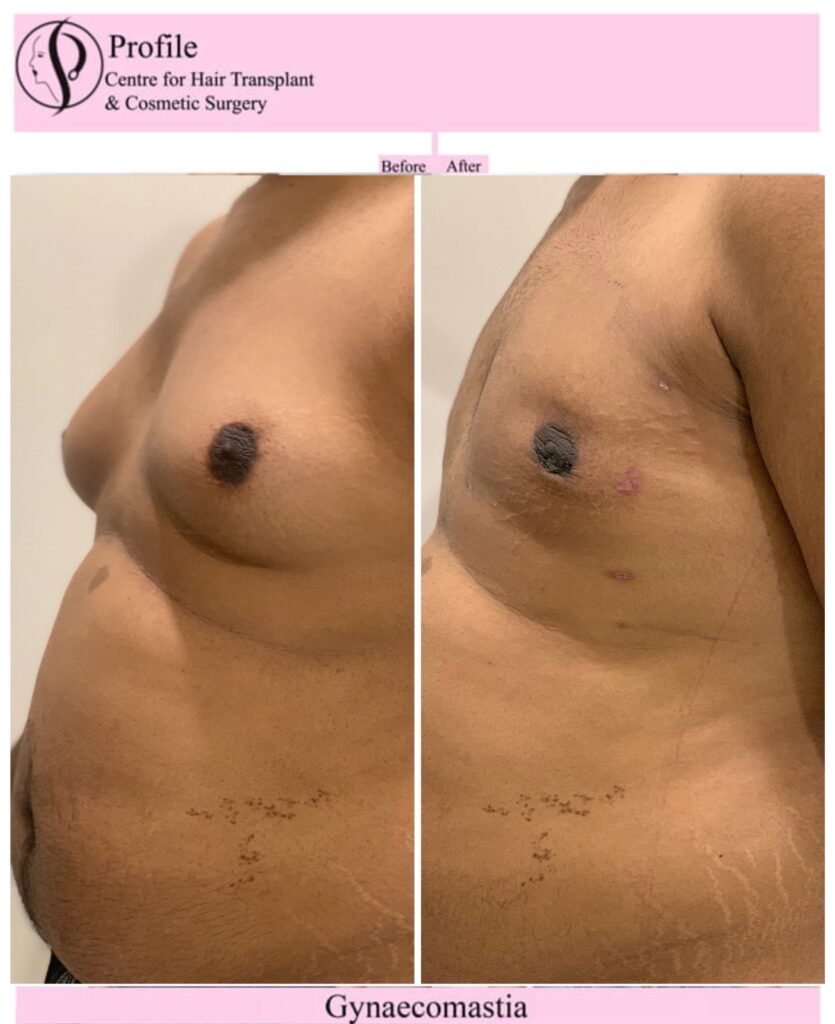
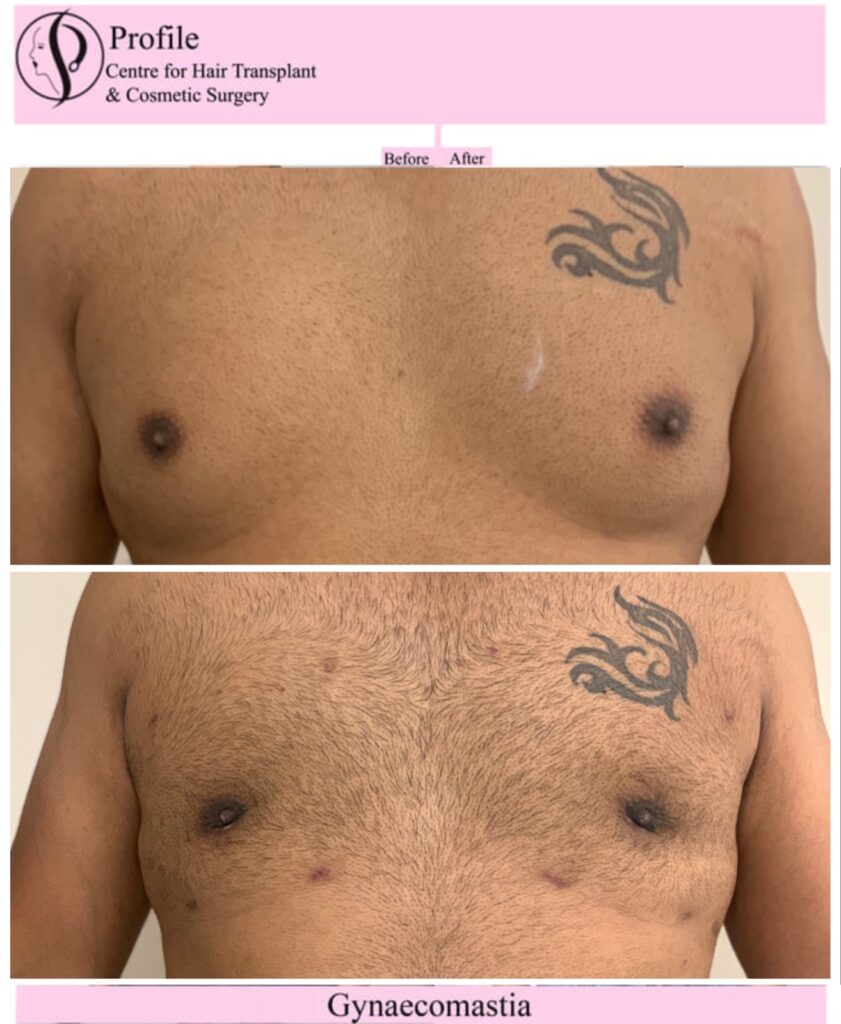
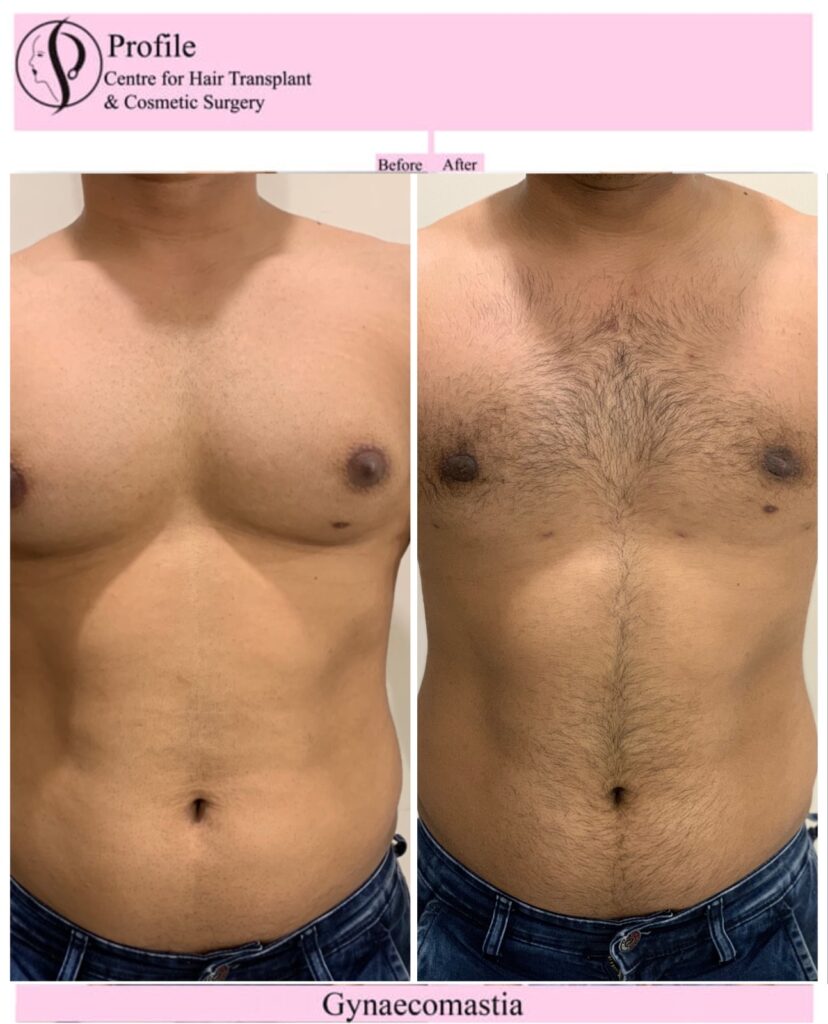
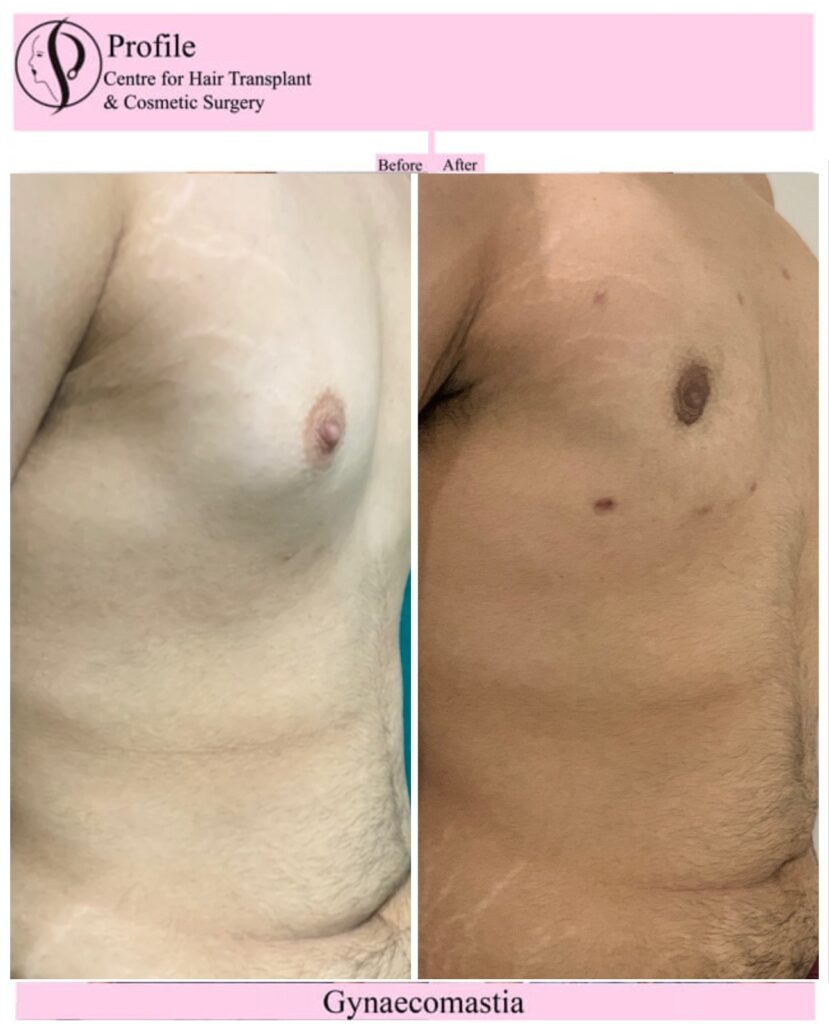
Gynaecomastia Surgery in Ludhiana: Quick Answers
Gynaecomastia surgery is a male breast reduction procedure that removes excess fat, glandular tissue or both to create a flatter, more proportionate chest.
Depending on the patient’s anatomy, treatment may involve conventional liposuction, liposculpture, VASER-assisted liposuction, laser-assisted liposuction, Power-Assisted Liposuction (PAL), gland excision or skin removal.
Liposuction may be sufficient when chest enlargement is mainly caused by fat. Firm glandular tissue often requires surgical excision, while significant loose skin may require additional treatment.
Neither technique is universally better. VASER uses ultrasound energy to assist fat removal, whereas PAL uses a powered oscillating cannula. The appropriate method depends on the patient’s condition and the surgeon’s assessment.
Patients should seek an assessment from a qualified, appropriately trained plastic surgeon who can evaluate the cause of chest enlargement, explain the available techniques and discuss the risks and expected results.
Dr. Vikas Gupta, senior plastic surgeon, has been performing gynaecomastia surgery for the past 18 years and has surpassed the milestone of 1,000+ procedures. He brings substantial experience and expertise in performing gynaecomastia surgery in Ludhiana.
Recovery varies depending on the grade of gynaecomastia, the patient’s age, and overall health status. At Profile Clinic, patients are usually discharged on the same day, and they can generally resume light routine activities within 24 hours, depending on their recovery and the surgeon’s advice.
Results can be long-lasting, but significant weight changes, hormonal conditions and certain medications or substances may affect the chest in the future.
The Cost Of Gynaecomastia Surgery Depends On The Grade Of Gynaecomastia, Medical Issues Related To Your Health, Choice Of Procedure, And Hospital Stay.
The Minimum Package At Profile Clinic Starts From ₹50,000 INR / $600 USD And May Go Up To ₹1,20,000 INR / $1,400 USD. The Final Amount Payable Will Be Communicated Well Before The Surgery Is Scheduled.
Gynaecomastia Surgery Falls Under Cosmetic Surgery And May Be Subject To Applicable Taxes As Per The Government Of India’s Rules And Regulations. These Taxes Must Be Borne By The Patient And Deposited Into The Government Account As Applicable.
Gynaecomastia Surgery Is Generally Not Covered Under Mediclaim Or Health Insurance Policies Globally.
