
Deep Plane Facelift in a 60-Year-Old Woman: A Natural Approach to Facial Rejuvenation
Facial ageing is a gradual process involving changes in skin elasticity, facial fat compartments, muscle support, and the underlying connective tissues. As we age, the cheeks may descend, nasolabial folds become more prominent, jawline definition may diminish, and the face may develop a tired or aged appearance. While Botox and dermal fillers can address certain signs of ageing, patients with significant facial laxity may require a more comprehensive surgical approach.
At Profile Clinic, we believe facial rejuvenation should focus on restoring facial harmony, maintaining natural expressions, and achieving results that complement the patient’s existing facial anatomy.
A Case of Facial Ageing in a 60-Year-Old Woman
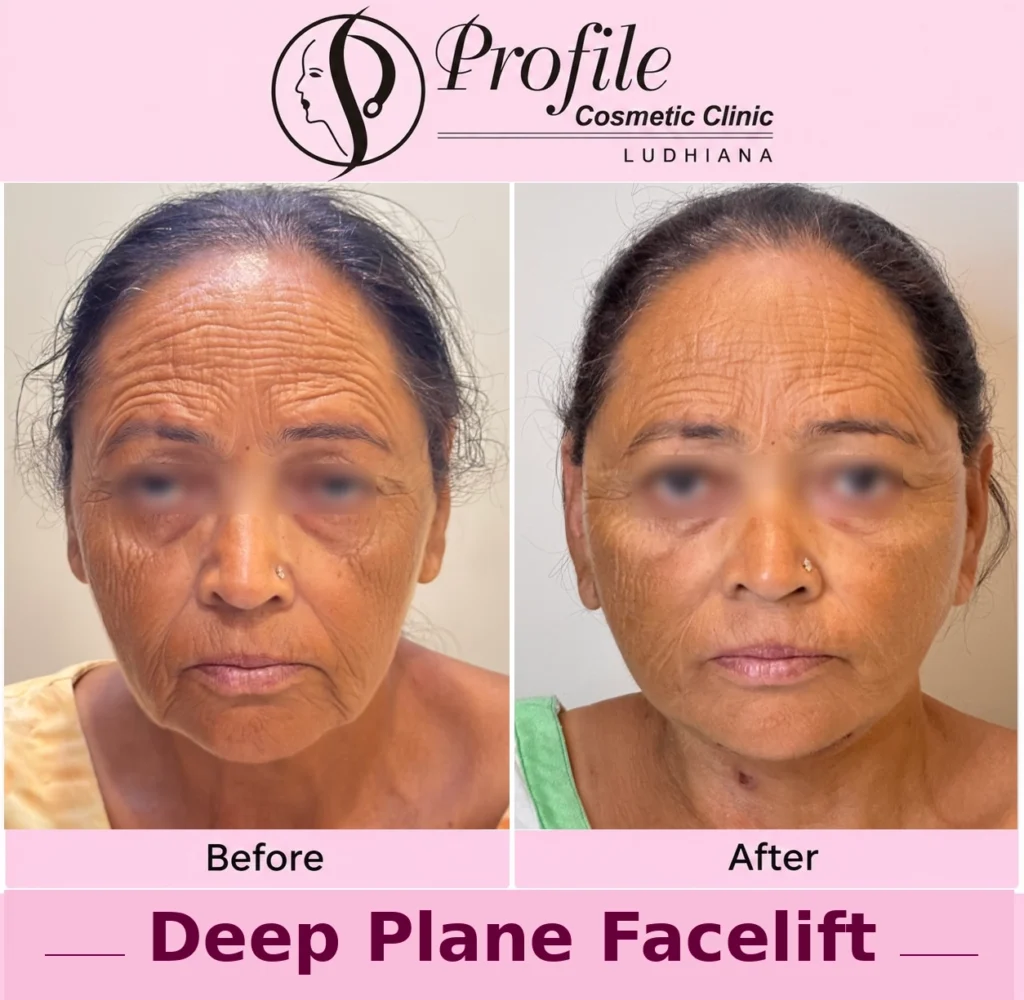
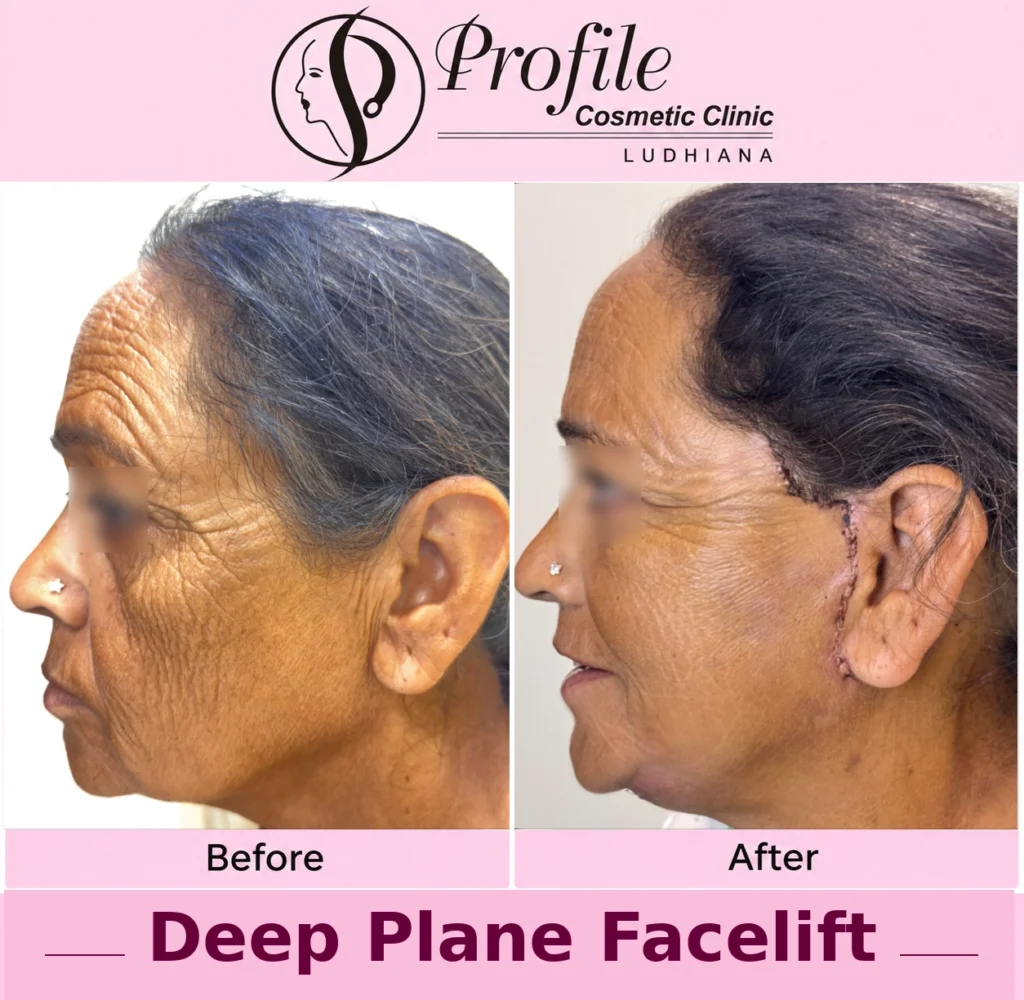
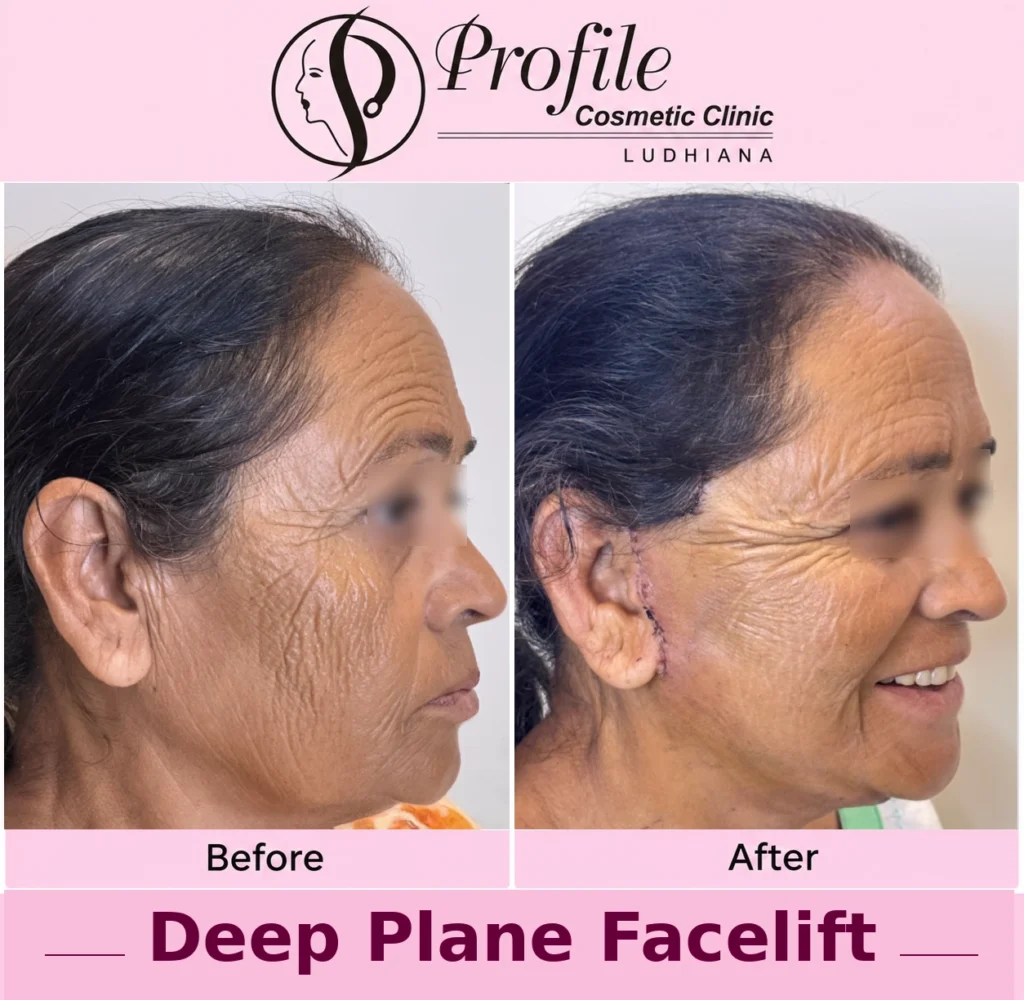
A 60-year-old female patient presented to our clinic with significant signs of facial ageing. She was concerned about the overall appearance of her face and wanted a more youthful, refreshed look. Having previously undergone Botox and dermal filler treatments, she was now seeking a more definitive and long-lasting solution to address facial laxity and tissue descent.
After a detailed consultation, the patient expressed her preference for a surgical facial rejuvenation procedure, specifically a deep plane facelift, rather than continuing with temporary non-surgical treatments.
Her expectations, facial anatomy, skin laxity, and overall suitability for surgery were carefully assessed before formulating the surgical plan.
[/vc_column_text]
Why Deep Plane Facelift?
Botox and dermal fillers are effective treatments for selected signs of facial ageing. However, they cannot adequately correct significant sagging caused by the descent of deeper facial tissues. A deep plane facelift addresses the underlying structural changes associated with ageing by releasing selected retaining ligaments and repositioning the deeper facial tissues.
This technique can help improve midface descent, deep nasolabial folds, jowling, lower facial laxity, and loss of jawline definition. By addressing the deeper tissues rather than relying solely on skin tightening, the procedure aims to achieve a more natural and harmonious facial rejuvenation.
For patients seeking meaningful improvement in facial ageing, deep plane facelift surgery can be an appropriate option following a thorough clinical assessment.
Detailed Consultation and Surgical Planning
Before surgery, an extensive discussion was conducted regarding the expected results, surgical technique, recovery process, limitations of the procedure, and possible complications. The patient was counselled in detail about important risks, including hematoma formation, facial nerve injury, temporary or permanent weakness, sensory changes or numbness, asymmetry, scarring, wound-healing problems, and other complications related to facial anatomy and surgery.
Understanding the facial nerve, its branches, and the surrounding anatomical structures is an essential aspect of facelift surgery. The importance of informed consent and realistic expectations was emphasised throughout the consultation.
Once the patient was satisfied with the discussion, understood the potential benefits and risks, and was considered suitable for surgery, the procedure was planned.
Surgical Approach: Deep Plane Facelift with Platysmaplasty
A classical deep plane facelift was planned, incorporating appropriate SMAS management, tissue release, repositioning, and suspension to address the patient’s facial ageing. Platysmaplasty was included as part of the surgical plan to improve the neck contour and address platysmal laxity where required.
Following repositioning and suspension of the deeper tissues, excess skin was conservatively excised, approximately 1–1.5 cm in the relevant areas, and the skin was redraped without undue tension. The objective was to achieve improved facial contours while preserving natural facial characteristics and avoiding an over-tightened appearance.
The surgical philosophy focused on restoring structural support, improving facial definition, and achieving balanced rejuvenation rather than simply pulling the skin tighter.
One-Month Postoperative Results
At the one-month postoperative follow-up, the patient demonstrated satisfactory improvement in her facial appearance and contours. The results were appreciated by both the patient and her family members.
On clinical examination, facial muscle movements were preserved bilaterally, with normal facial motor function observed. The patient was satisfied with her postoperative appearance and expressed happiness with the outcome.
Although early results were encouraging, facelift recovery continues over the following months as swelling subsides, tissues settle, and scars gradually mature.
A Patient-Centred Approach to Facial Rejuvenation
Every face ages differently, and there is no single procedure suitable for everyone. The choice between injectables, minimally invasive treatments, and facelift surgery depends on the degree of facial ageing, tissue laxity, anatomical considerations, medical suitability, and individual expectations.
In this case, the patient’s preference for a longer-lasting surgical solution, combined with appropriate clinical assessment and detailed counselling, guided the decision to proceed with deep plane facelift surgery.
At Profile Clinic, our approach to facial rejuvenation emphasises careful assessment, anatomical precision, individualised surgical planning, patient safety, and natural-looking results. The goal is not to change who you are, but to help restore a refreshed appearance while preserving your facial identity and expressions.
This article is intended for educational purposes only. Facial rejuvenation procedures carry risks, and outcomes vary between individuals. A detailed consultation with a qualified plastic surgeon is necessary to determine the most appropriate treatment.


