Hair Transplant in Ludhiana, Punjab
Choose Profile Clinic For Hair Transplant
Dr. Vikas Gupta (Hair Transplant specialist)

Dr. Vikas Gupta (MS (General Surgery), MCh (Plastic & Cosmetic Surgery) Hair Transplant & Plastic Surgery Expert
Hair loss is a widespread issue that affects both men and women worldwide, and finding the best treatment is of utmost importance. To tackle this condition effectively, seeking the guidance of medical experts who are up-to-date with the latest technological advances is crucial. One such innovative treatment that has shown remarkable results is the FUE hair transplant. This procedure enables individuals to attain natural-looking and long-lasting hair Re-growth.
Why Choose Profile Clinic for Hair Transplant?
Our hair transplant established in 2010 is widely recognized as one of the leading establishments in the field, dedicated to helping patients combat excessive hair loss in men and women. By visiting our clinic, you can enjoy a range of benefits, including:
Access to cutting-edge Turkish hair restoration expertise, A well-managed facility spreading 7500sq.ft. area and most supportive staff committed to providing innovative care A wide range of hair transplant treatment options (FUE, FUT, Beard, Eyebrow), using the latest technology (Keep Implantation) A commitment to achieving customer satisfaction Advanced techniques and artistic sensibilities to ensure optimal results A comfortable, safe, and hygienic environment for all patients
We take pride in offering the highest level of care to our patients, and we are constantly seeking new ways to improve our services and ensure that our patients receive the best possible outcomes. If you are seeking a reliable solution to hair loss, we invite you to visit our clinic and experience the difference for yourself.
- State-of-the-art technology
- Advanced techniques
- Artistic sensibilities
- Desired results
- Comfortable, safe, and hygienic environment
Book Your Consultation Today
Take the first step toward restoring your hair and confidence. Contact us now to learn more about the best hair transplant in Ludhiana, the best hair transplant in Punjab, and our affordable solutions for a Premium hair transplant in Ludhiana. Let our expert team help you achieve the natural, full hairline you’ve always wanted!
Hair Transplant Treatments

FUE, or Follicular Unit Extraction, is a highly effective and minimally invasive hair transplantation procedure. During this surgical process, a specialist takes a small number of hair grafts from the donor area at the back of the scalp and transplants them to the recipient area that requires treatment. One of the major benefits of this procedure is that it does not cause scarring at either the donor or recipient sites.

These days, young ones usually go with a beard because it contributes to their style. But several are struggling to grow beard naturally or suffering from beard hair fall. In this condition, a beard hair transplant helps them to grow it again and the specialist collects the hair graft from the back of the head, after that transplant at a beard.

FUT is an abbreviation for follicular unit transplant or strip surgery, which is a proven and efficient method for individuals who require a substantial number of hair grafts to treat bald spots. The process involves extracting a strip of hair grafts from the donor area and implanting them into the affected region.

Body hair transplant is designed for those who do not have proper hair growth on the scalp and want to get fuller hair growth only in one sitting. In this case, hair grafts are collected from certain body parts including chest, beard, underarms, and pubic hair.

Bio FUE is another type of hair transplant, which is quite similar to Follicular Unit Extraction, in which blood and growth factors are separated to re-transplant at the recipient area. This is beneficial for those, who want fuller hair growth. Well, this is a completely painless treatment because it is stitch-free treatment.

Eyebrows not only contribute to ladies’ beauty but also adds elegance to men’s style. If you are unable to grow proper eyebrows or you may lose hair due to injury or burning problems, then you need to go with an eyebrow hair transplant. Modern techniques are used to perform eyebrow hair transplants to grow eyebrow.
FAQ's - About Fut & Fue Hair Transplantation Surgery
What Is Follicular Unit Transplantation (FUT)?
FUT (Follicular Unit Transplantation): This is also known as the strip harvesting method, in which the surgeon harvests the strip of hair grafts from the back of the scalp. The back of the scalp is known as the donor area. Thereafter, those harvested grafts are transplanted in the affected area. No doubt, this treatment results in fuller hair growth, but it may leaves a scar in donor area. At Profile Clinic Dr. Vikas Gupta MCh Plastic Surgeon performs FUT harvest with cutting edge double ended multiblade & trichophytic closure which gives negligible/ invisible scar in donor area.
So Who Should go for FUT Hair transplant in the dominating era of FUE?
- FUT is a relevant to those who do not want head shave at all
- Women who do not want hair cut in donor area
- Those who are not good candidate for FUE
“FUT is not outdated is it still in vogue specially done by highly trained plastic surgeons in hair transplant surgery, Profile Clinic takes distinction of doing FUT in entire north India”
What Is Follicular Unit Extraction (FUE)?
FUE (Follicular Unit Extraction): This is the most well-known and advanced method of hair transplantation, which always gives you mind-blowing or desired results. In this treatment, the surgeon collects single unit of graft with the help of electric or battery operated machine of the size of ballpen. It does not give any linear scar in donor area at Profile Clinic this procedure is performed by our MCh Plastic Surgeon Dr. Vikas Gupta and his team since 2010.
Who performs Hair Transplant Surgery in Profile Clinic?
Dr. Vikas Gupta MCh Plastic Surgeon who is specially trained for Hair transplant surgery in India & South Korea is chief performing surgeon in all hair transplant procedures. In any hair transplant surgery harvesting the hair is one by Dr. Vikas Gupta, Slit making is done by Dr. Vikas Gupta, Implantation is performed under his direct supervision all the time and performed by Hair Transplant technicians. All Technicians who work with him have at least experience of 10Lakh Hair Follicle per Technician till date.
Our Hair Transplant Team work only, Exclusively in Profile Clinic, We do not allow our team members to do transplant anywhere outside Profile Clinic, so each and every client gets exclusive touch of Profile Clinic which can’t be compared with any clinic
What is the vision of Profile Clinic?
Since 2010 our clear vision is to provide class and premium services in hair care and cosmetic surgery to the exclusive clients who understands the procedure and outcome very well.
What is the mission of Profile Clinic?
World-class, Premium Surgical Facility in the field of hair transplant and plastic surgery and laser surgeries to entire community across globe.
Patient Testimonials

Gallery
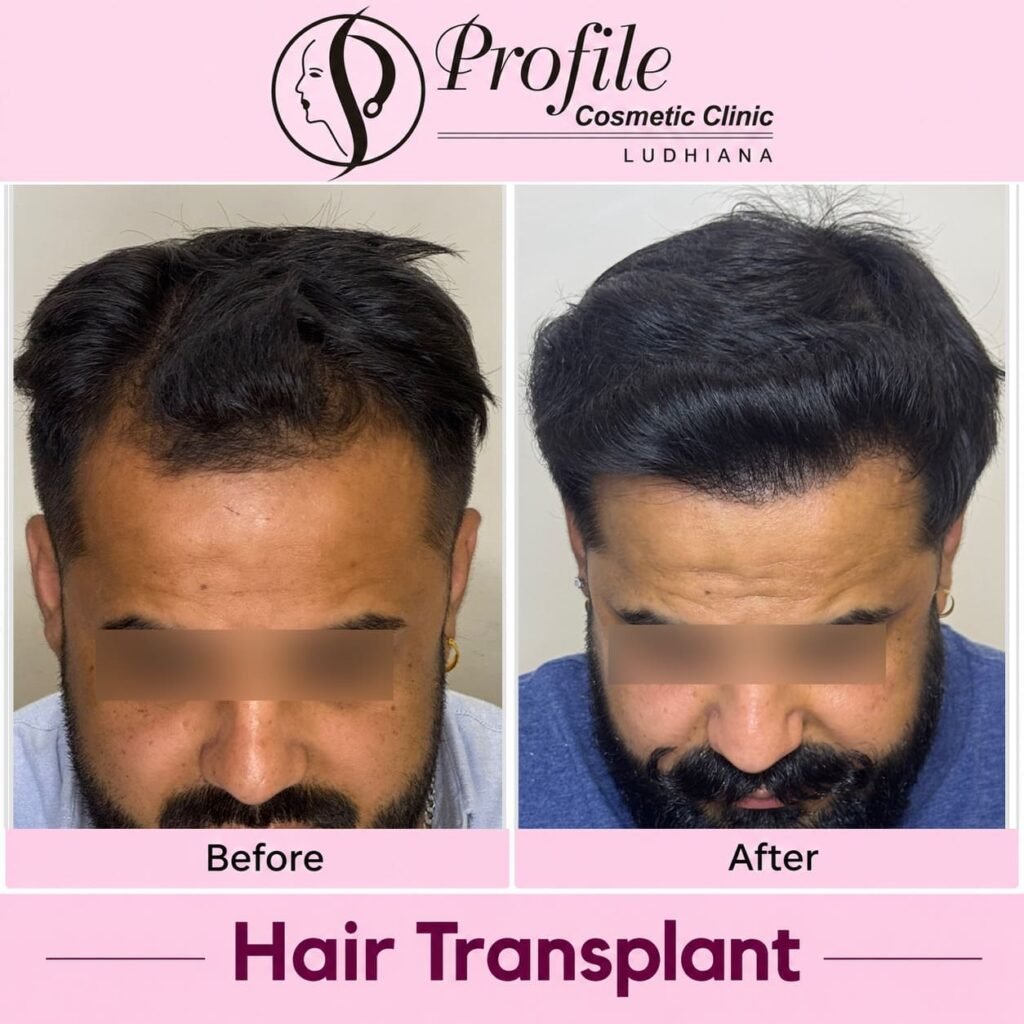
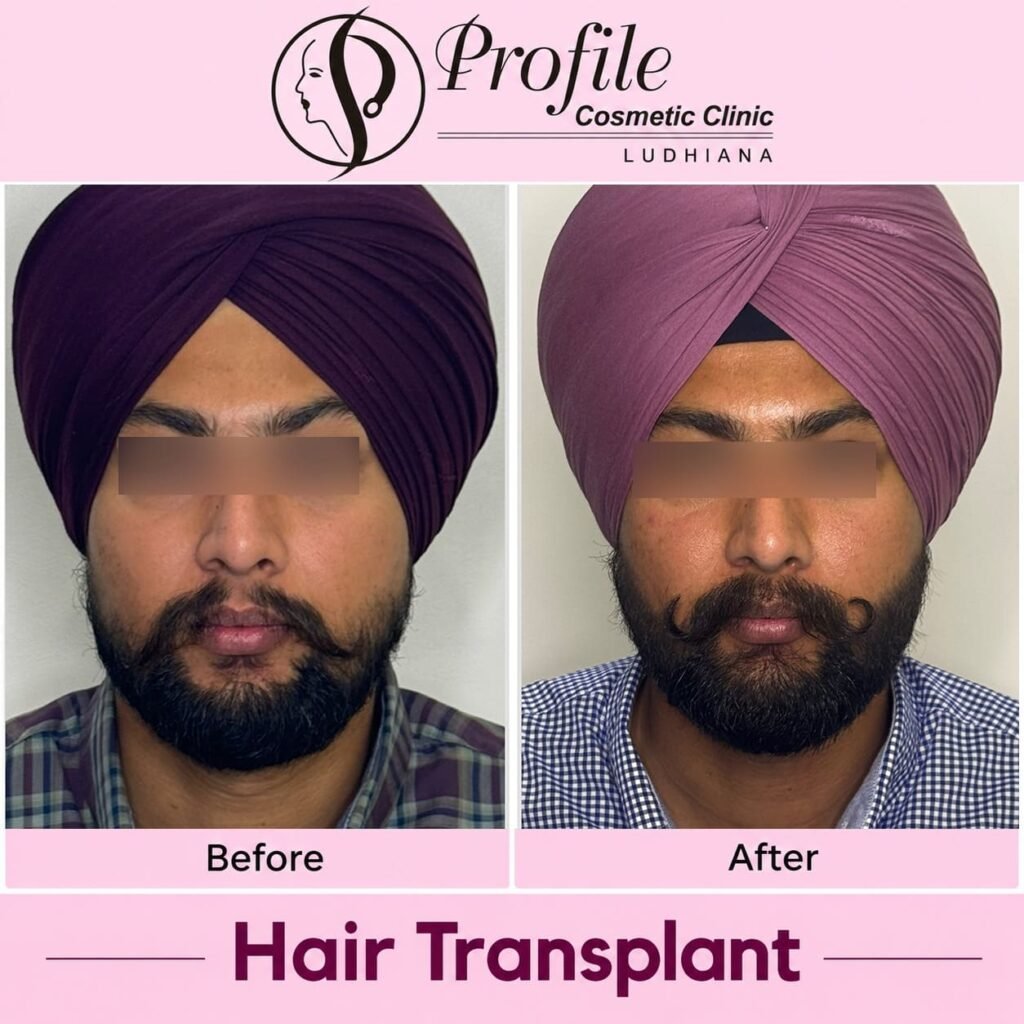
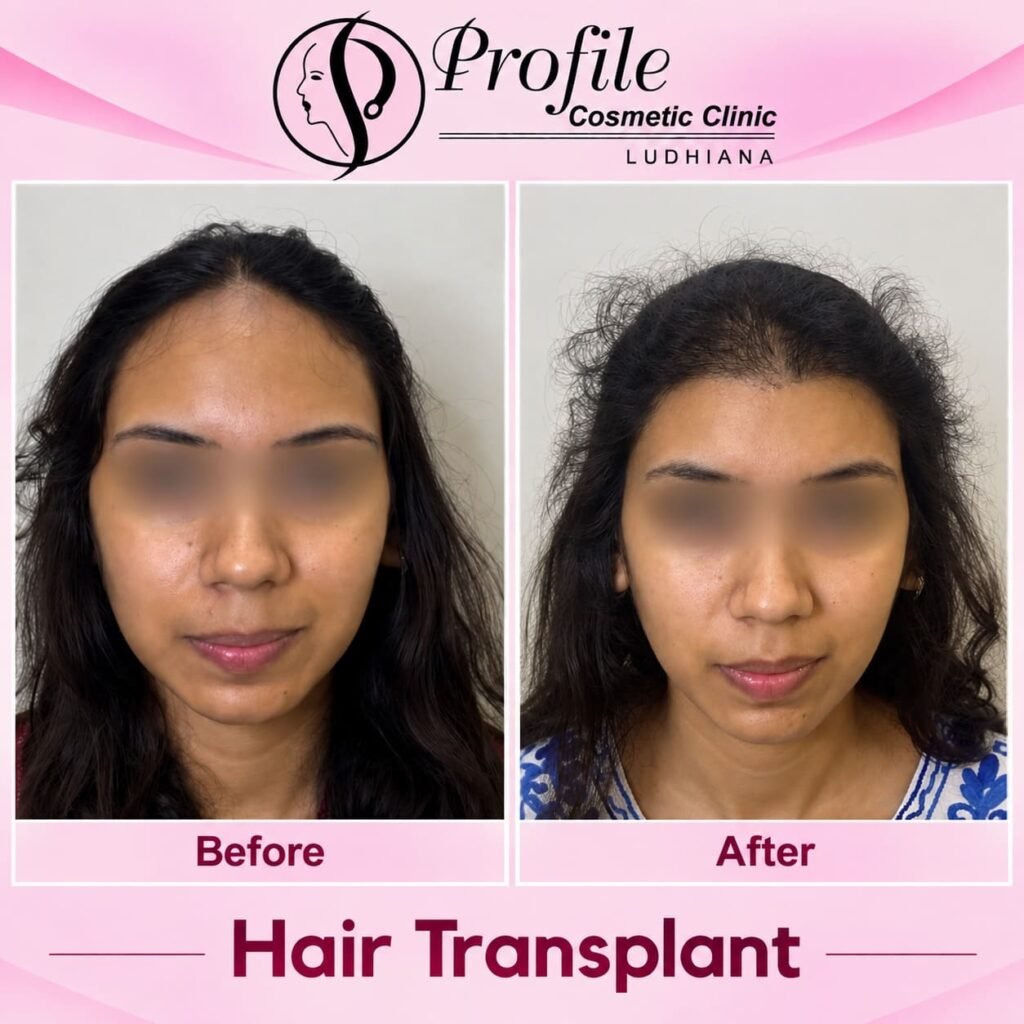
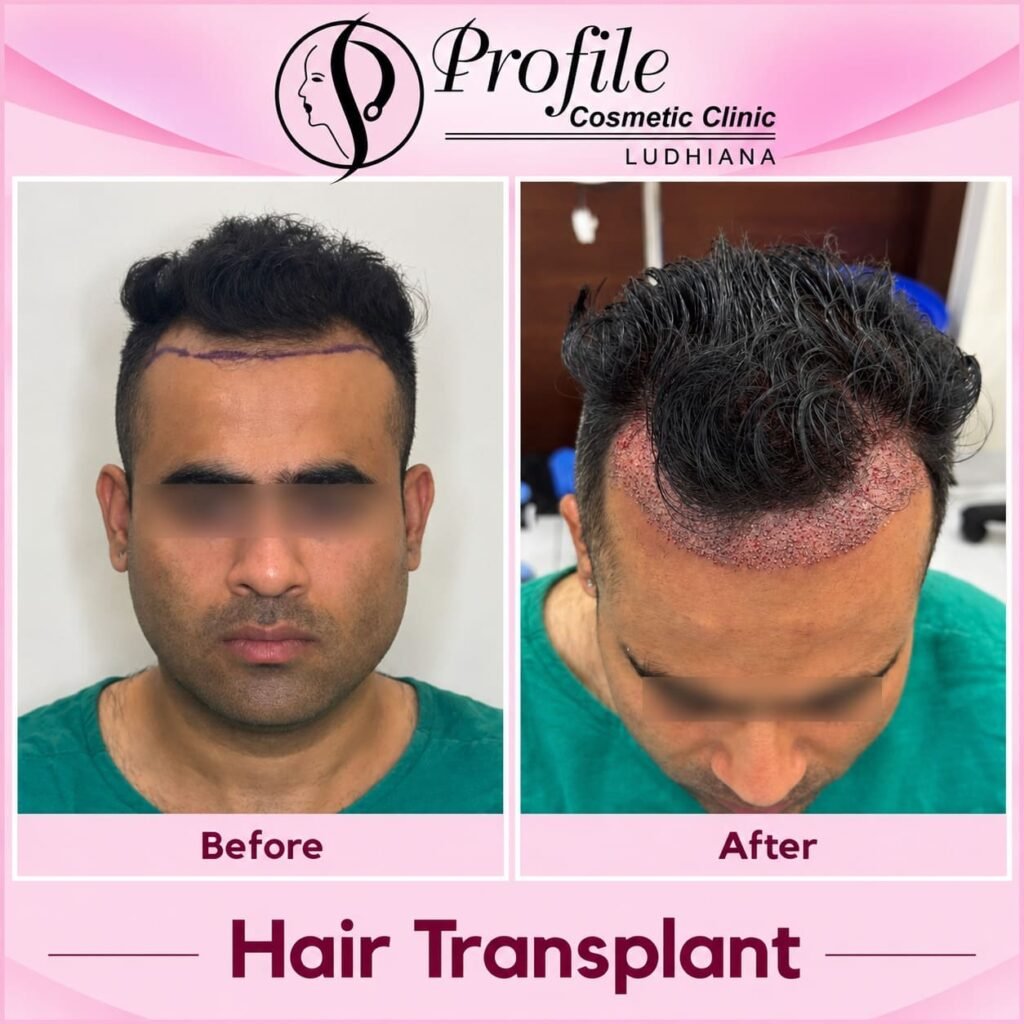
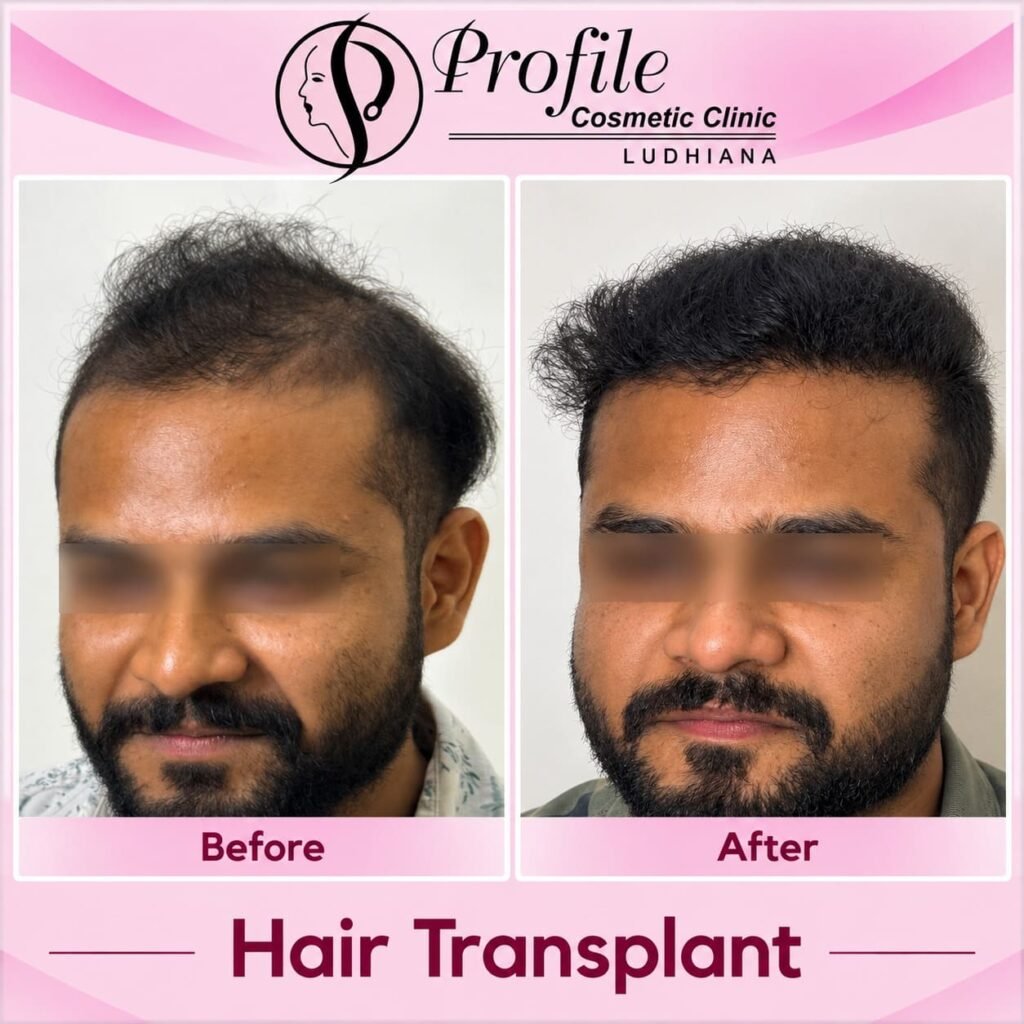
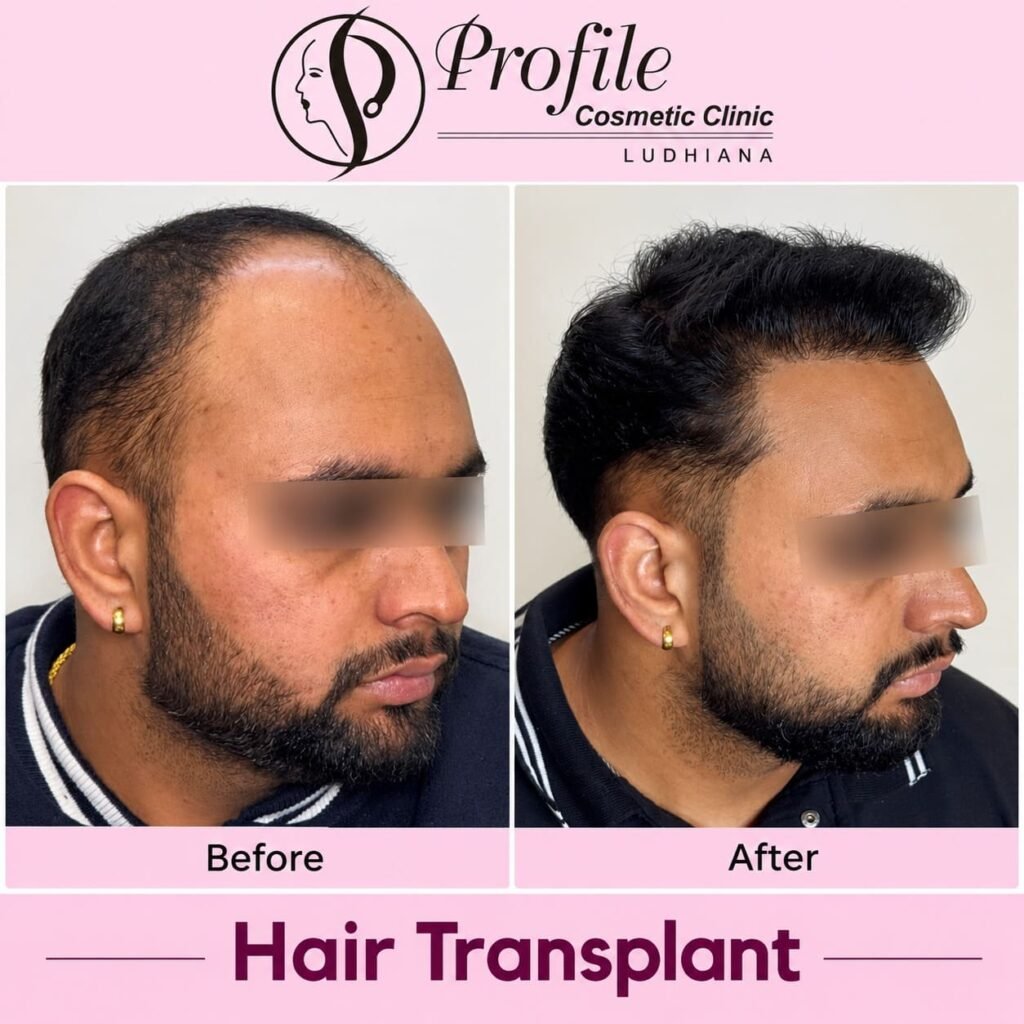
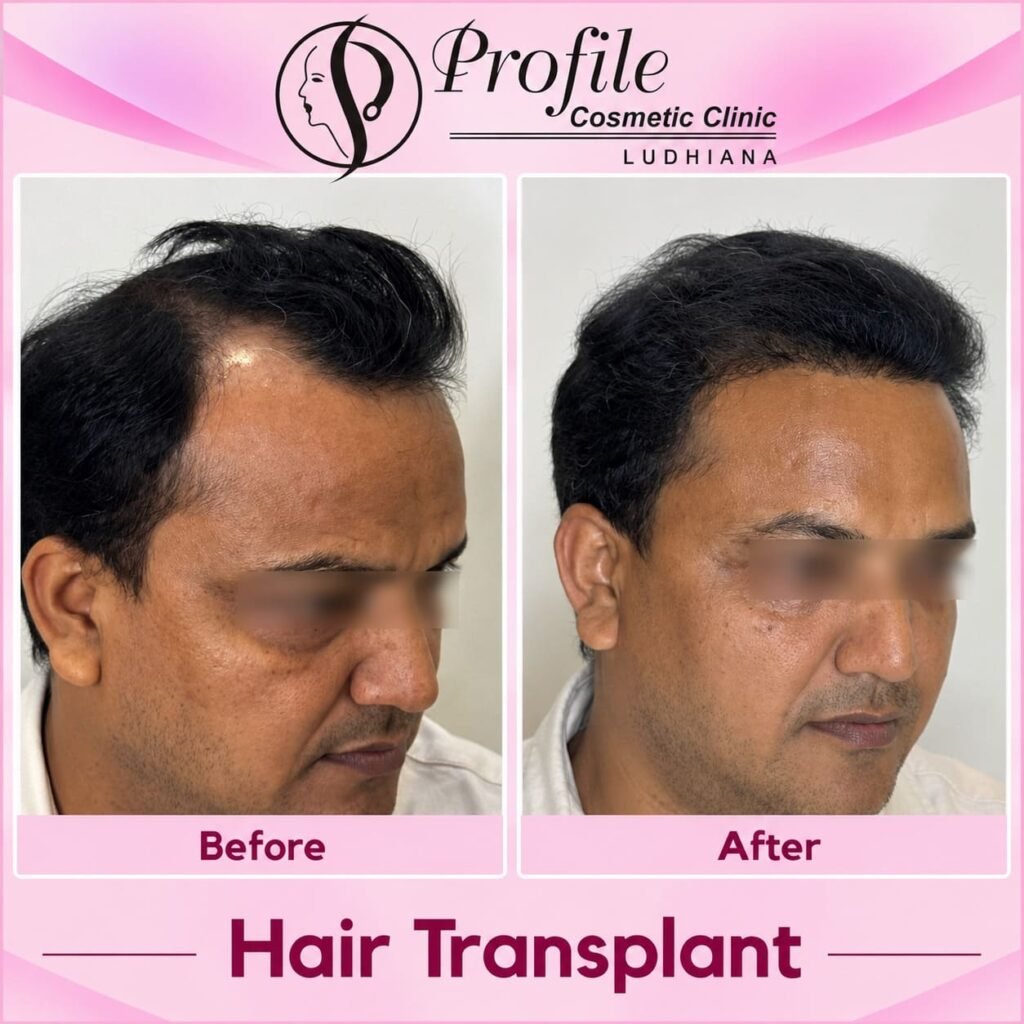
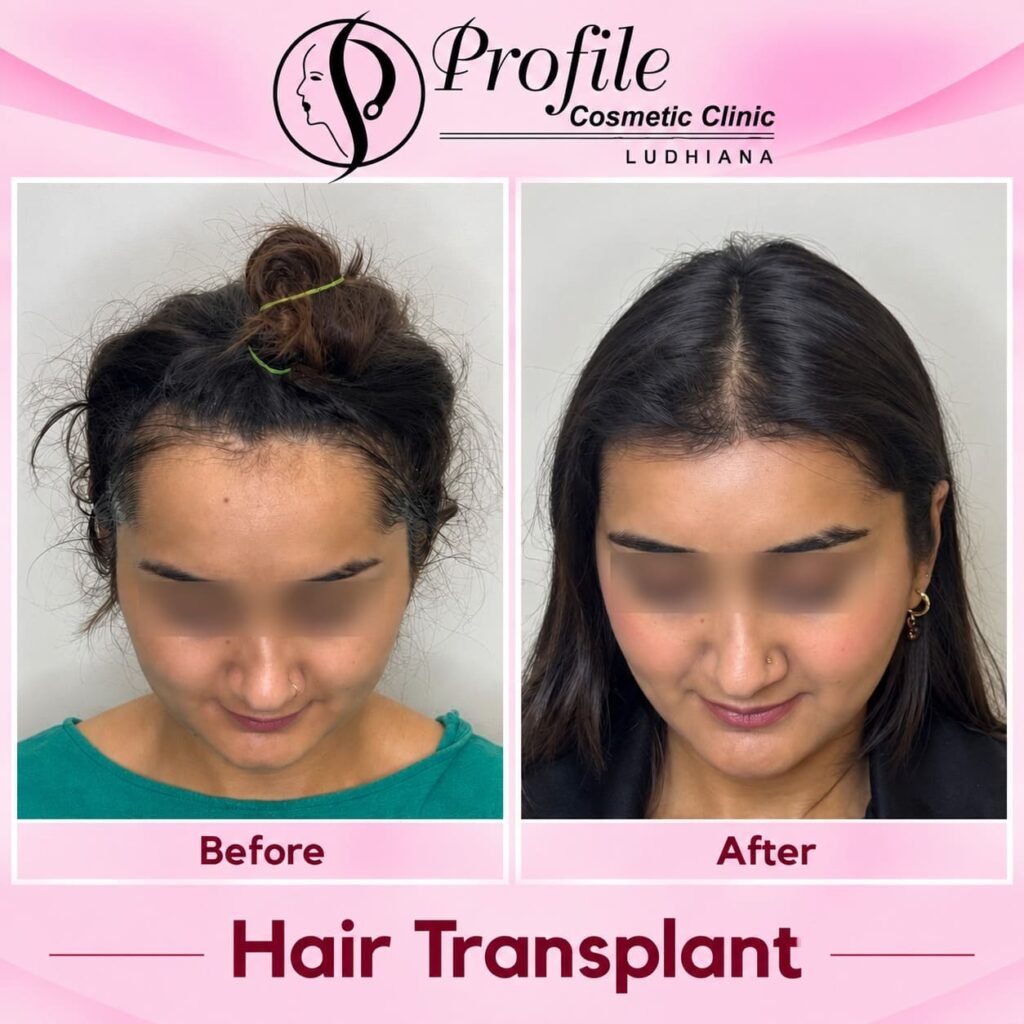
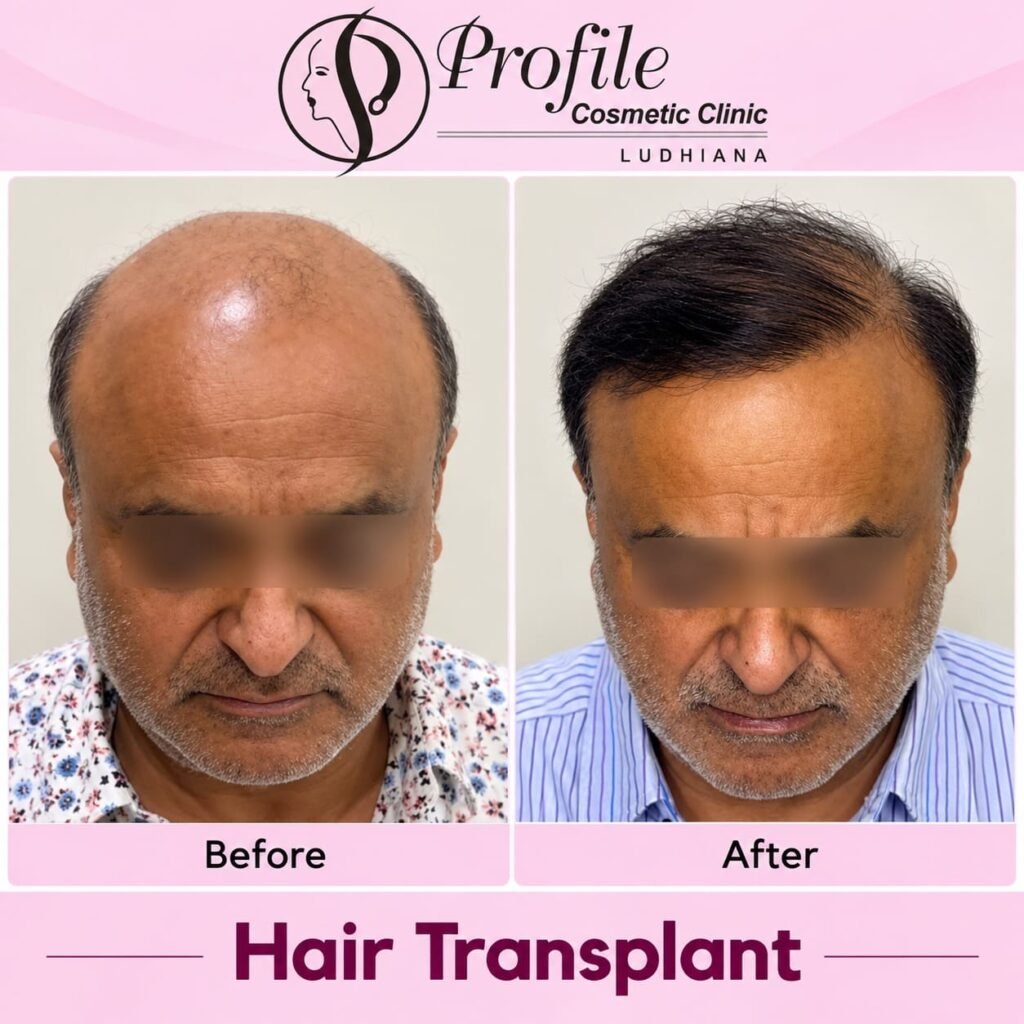
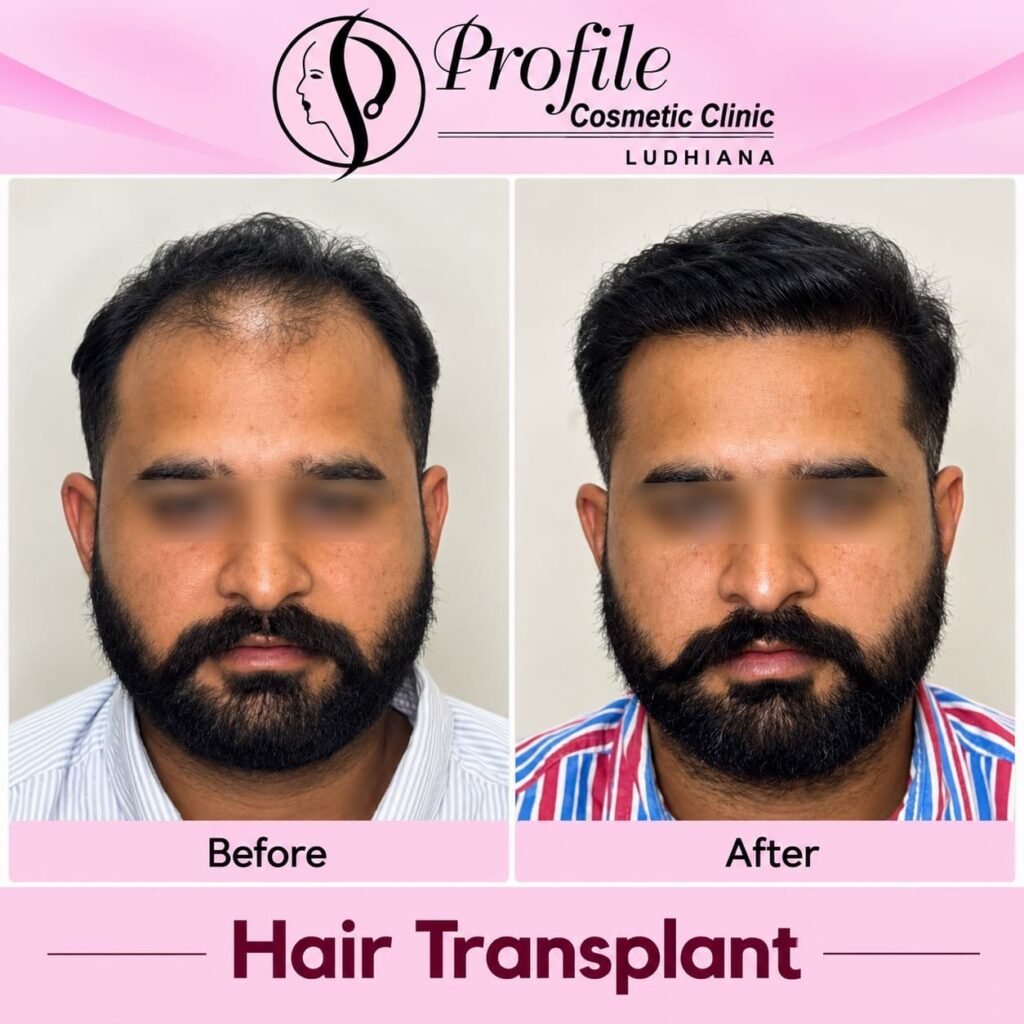
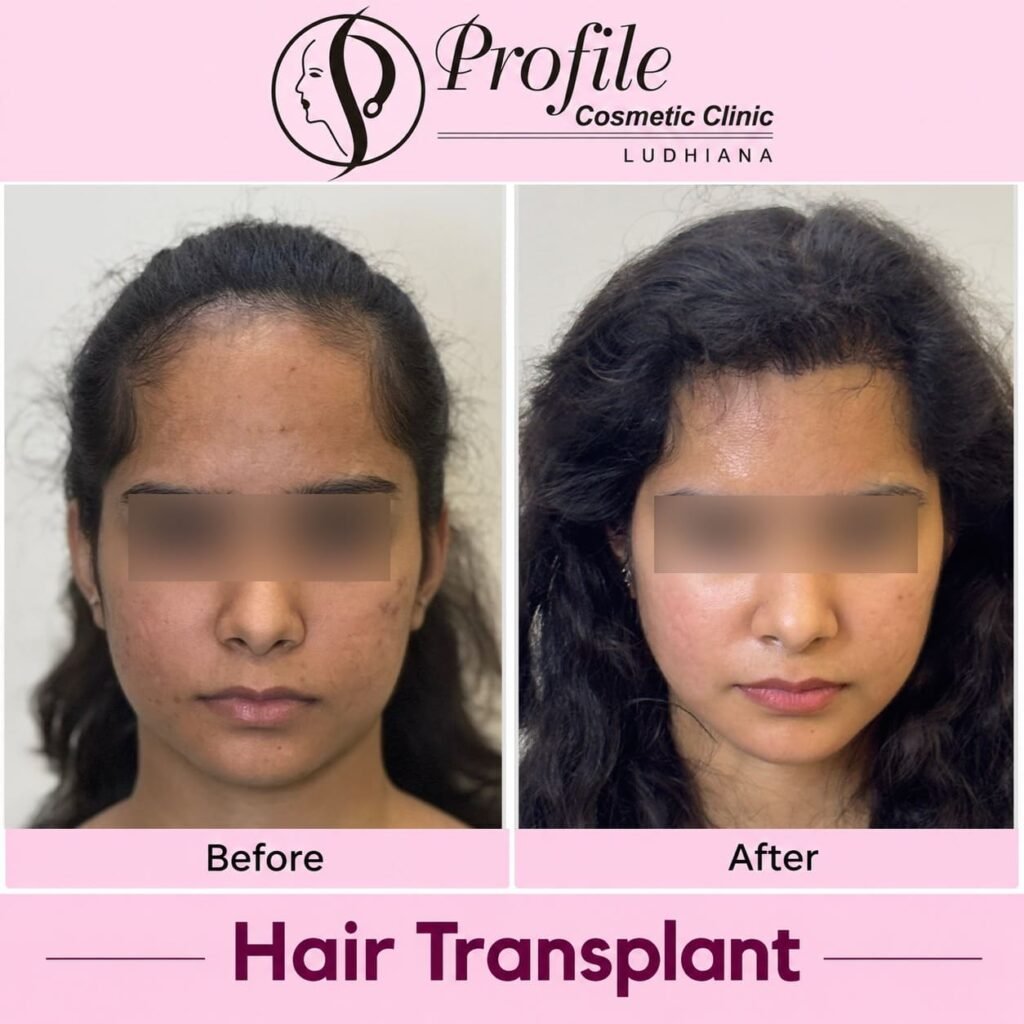
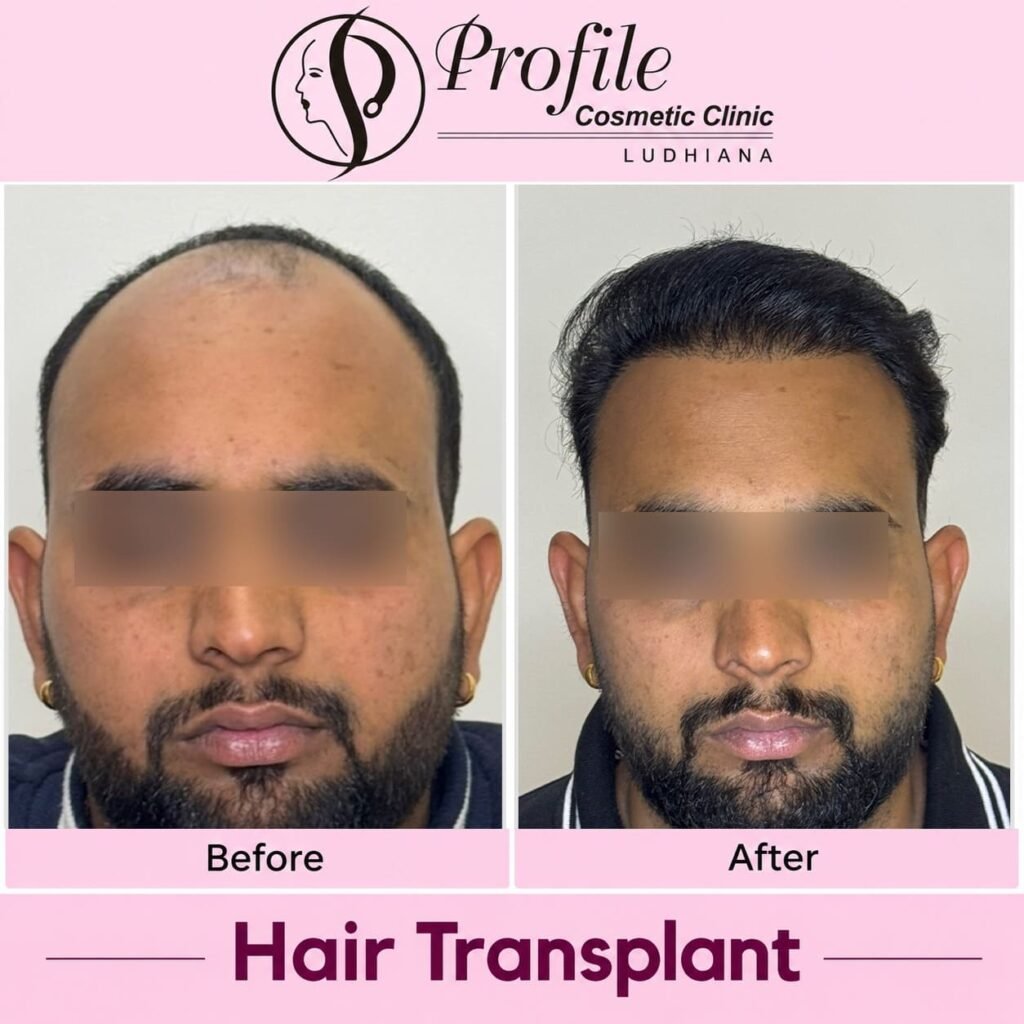
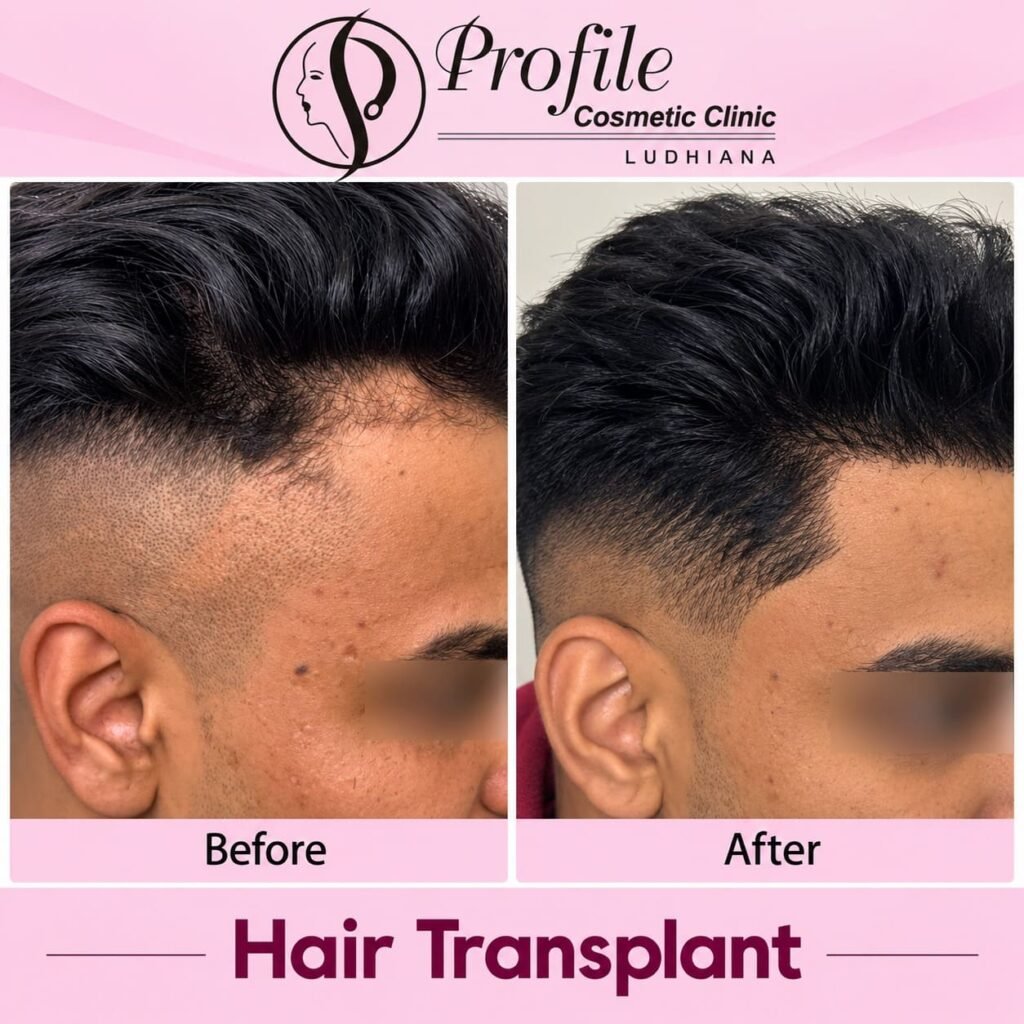
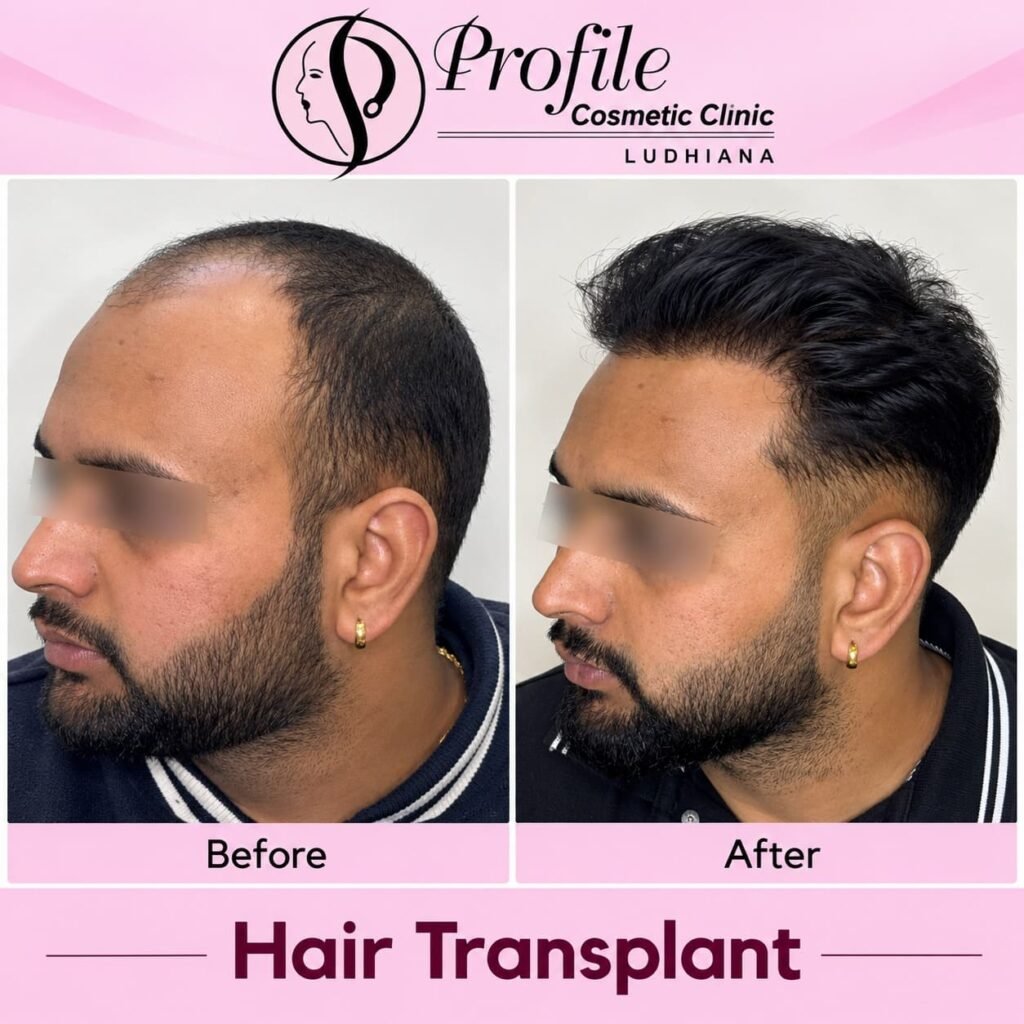
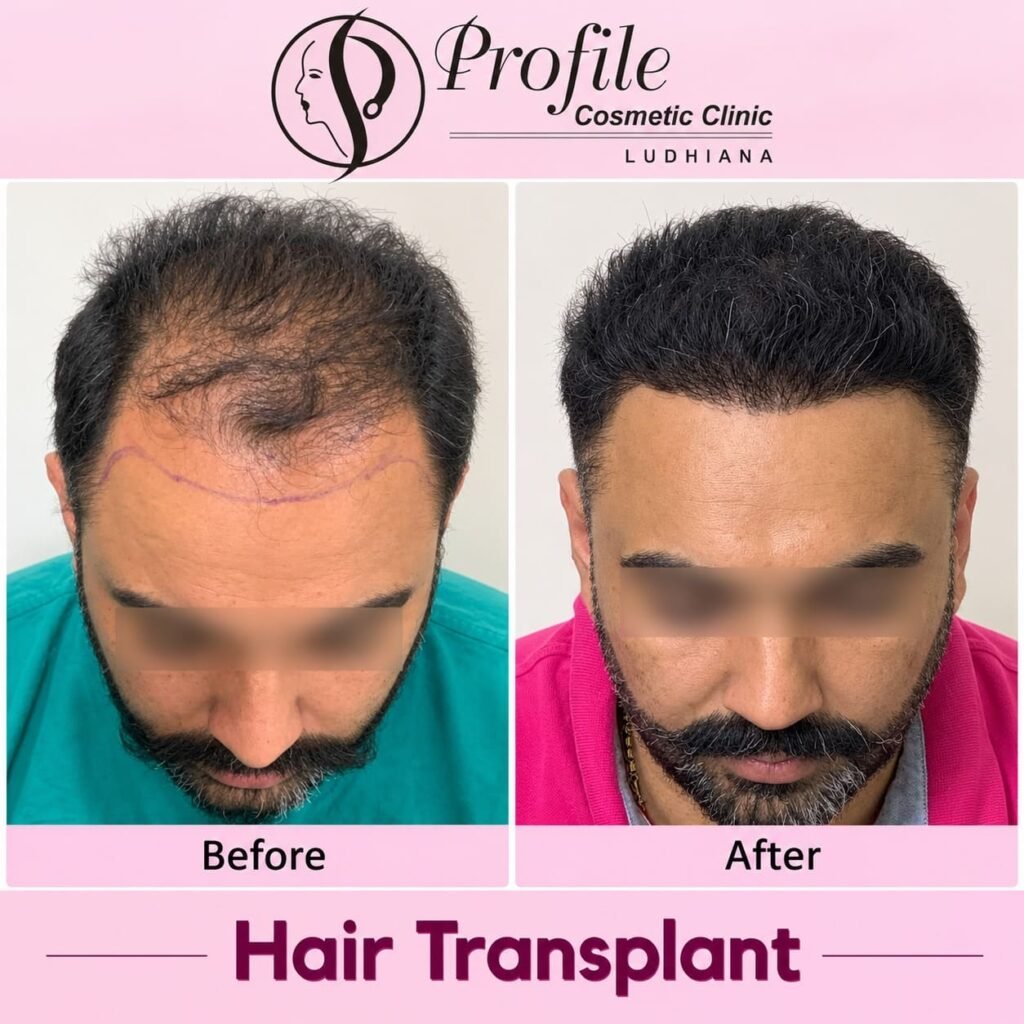
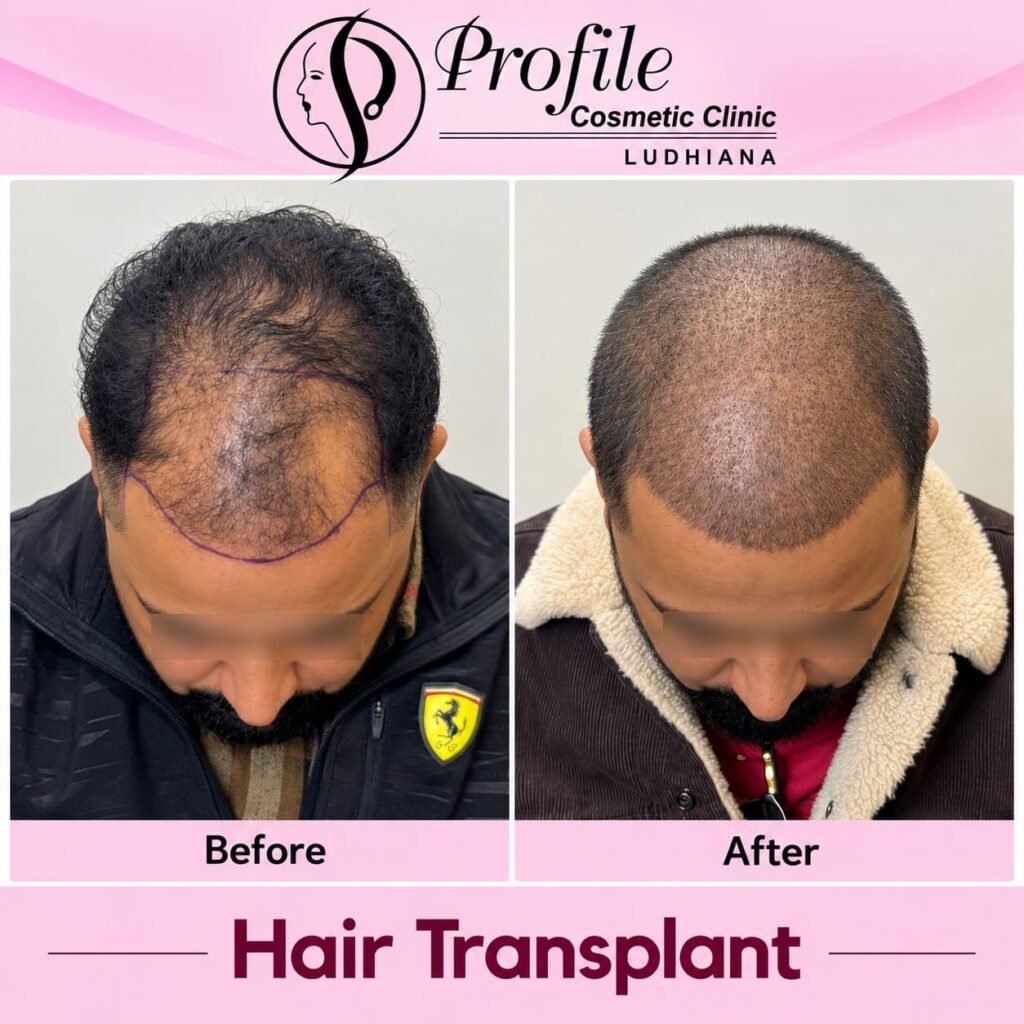
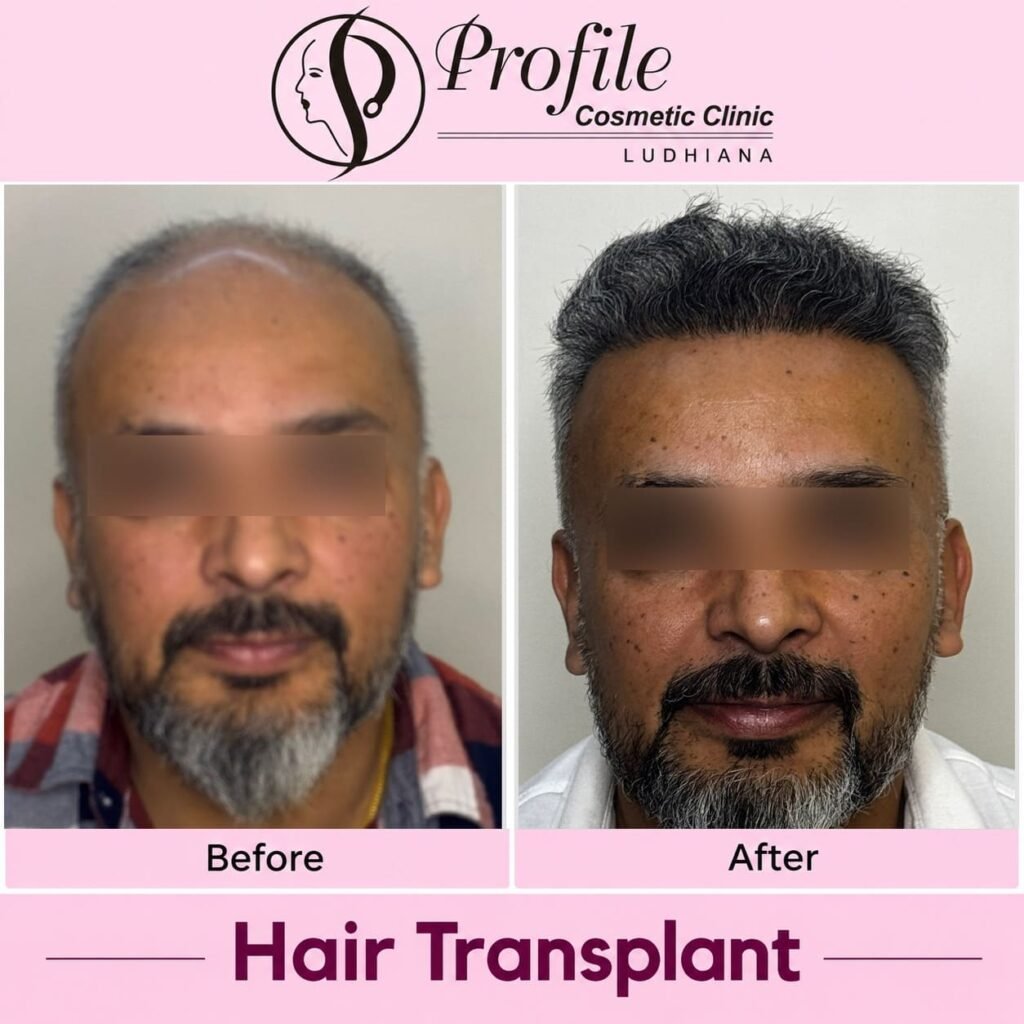
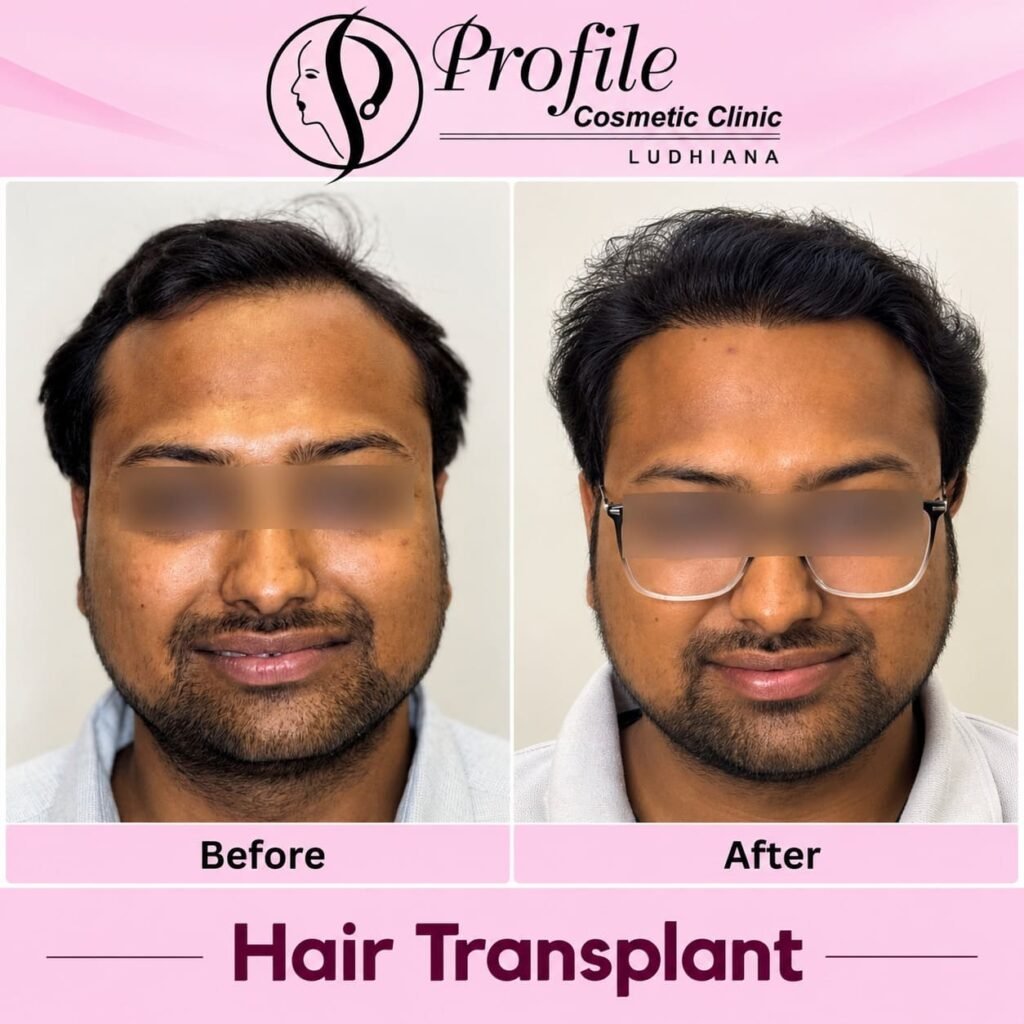
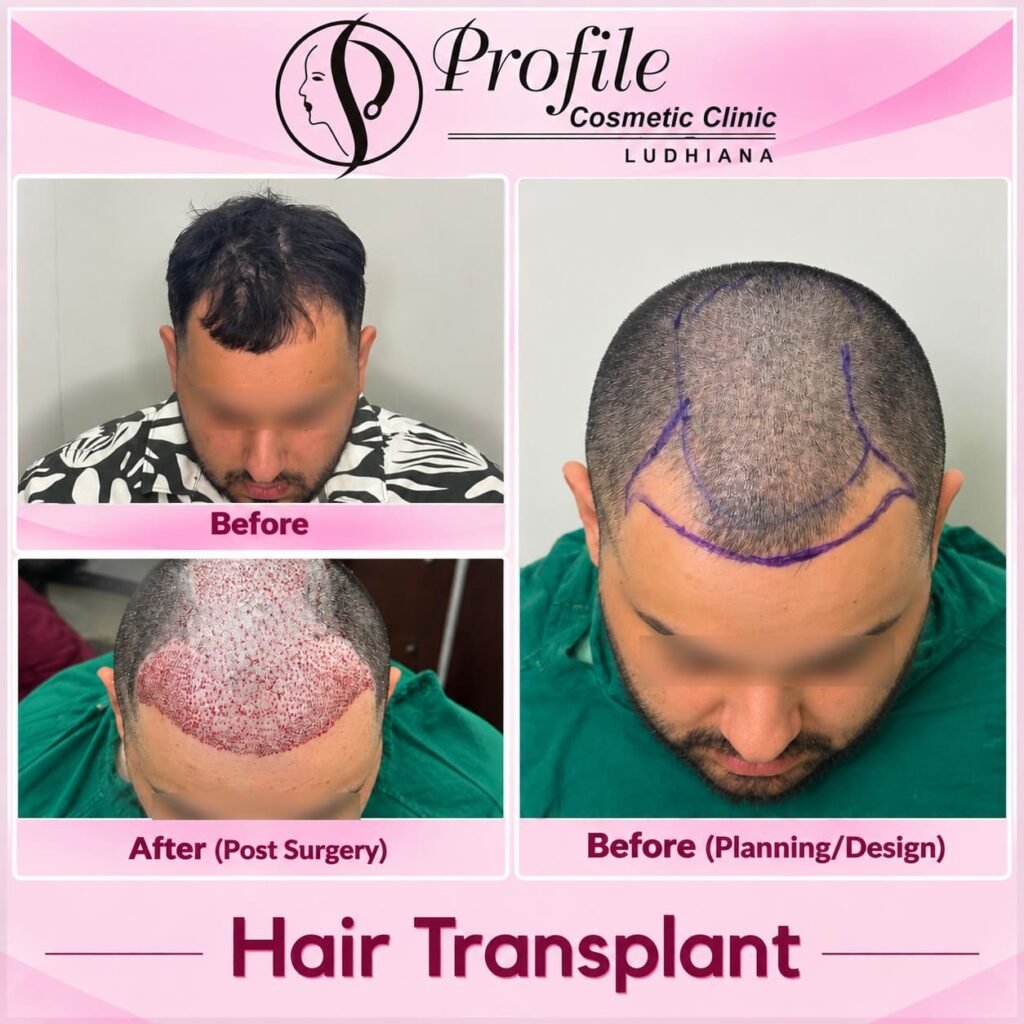
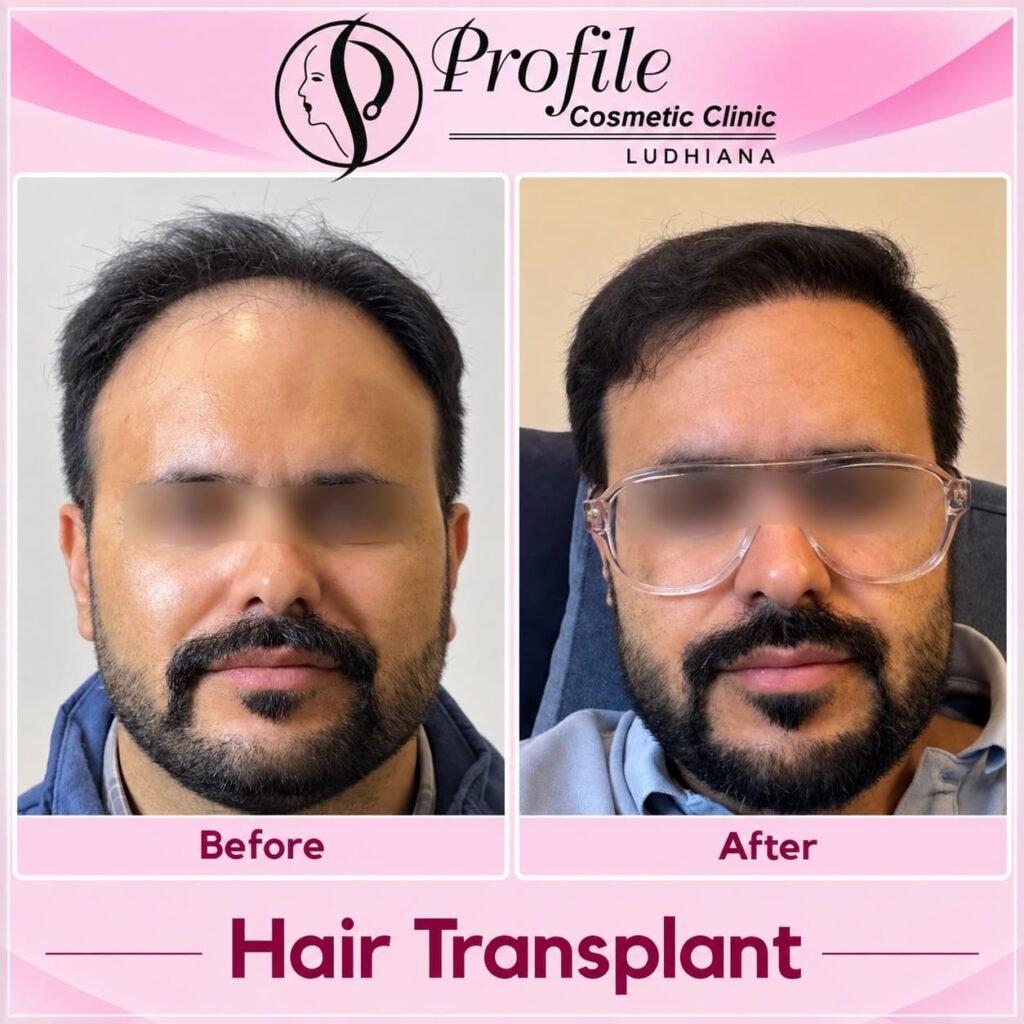
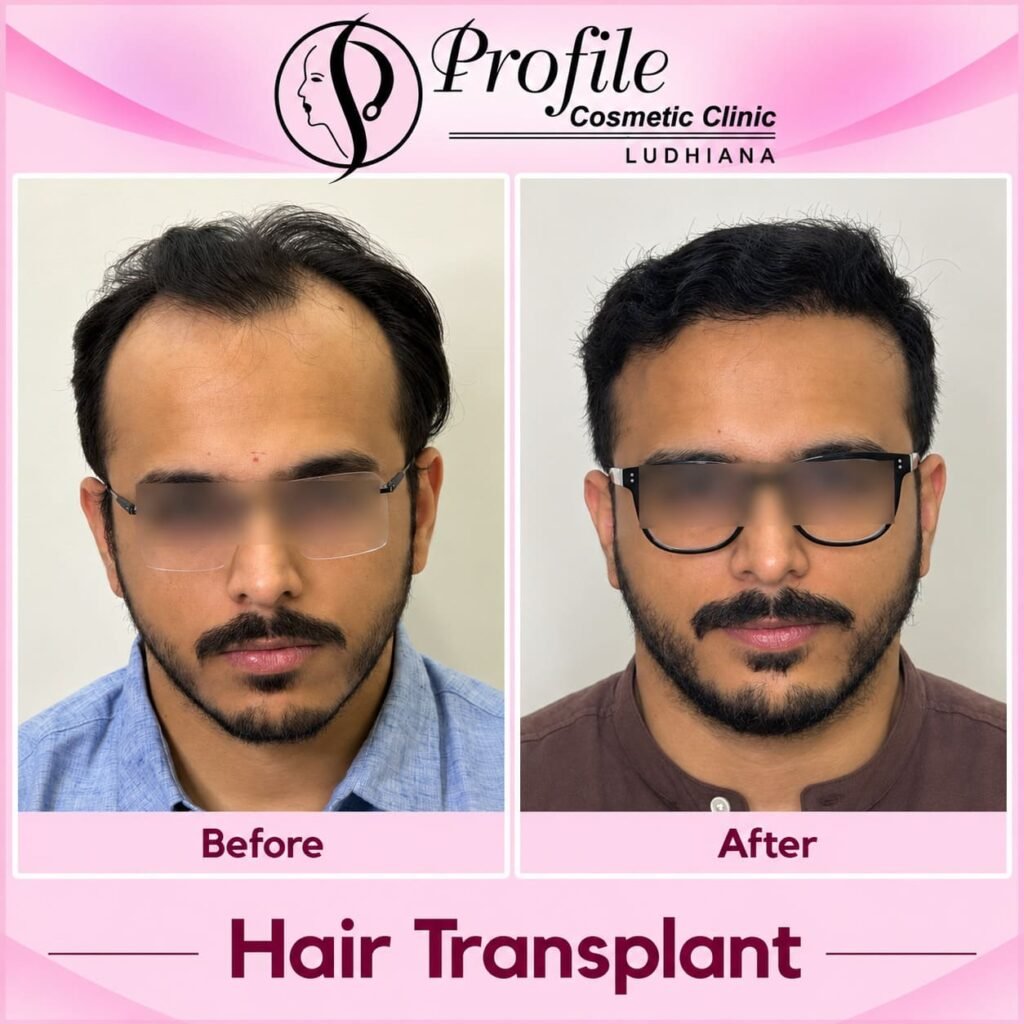
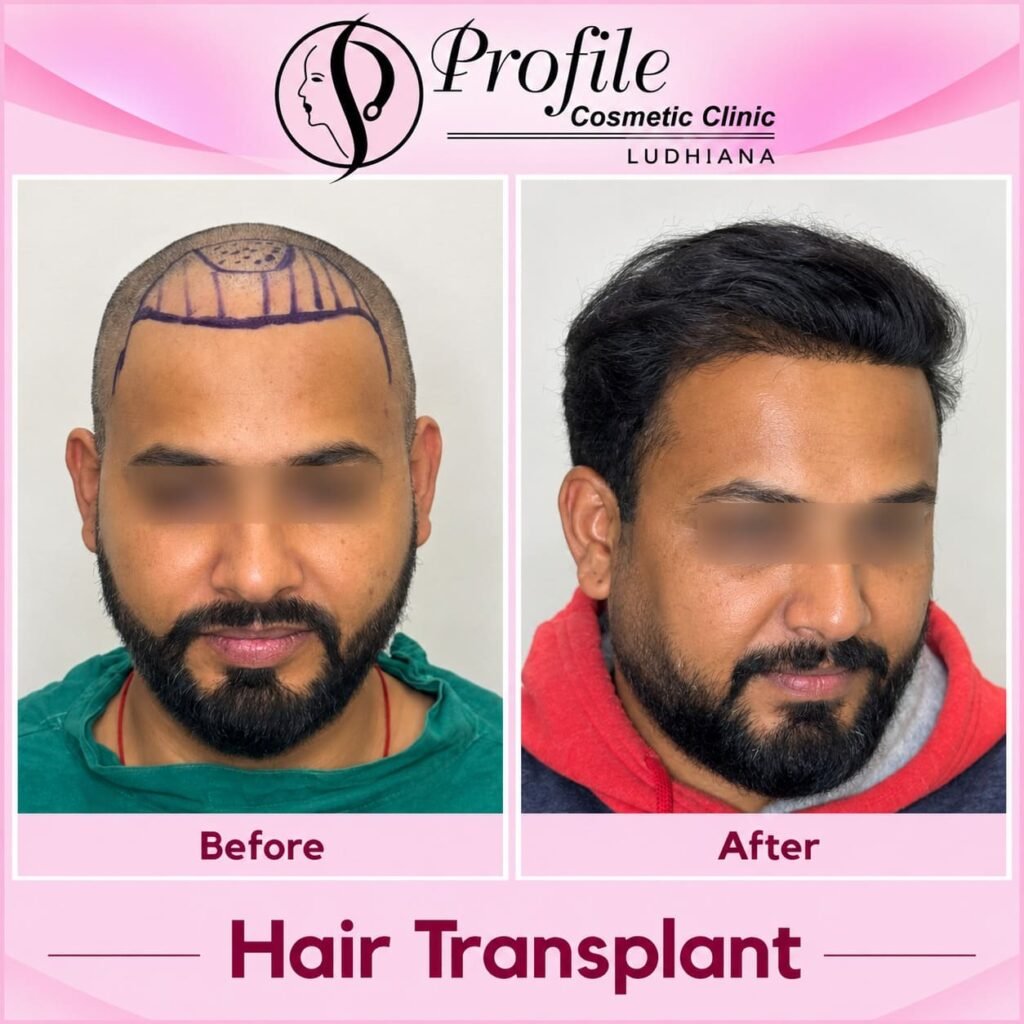
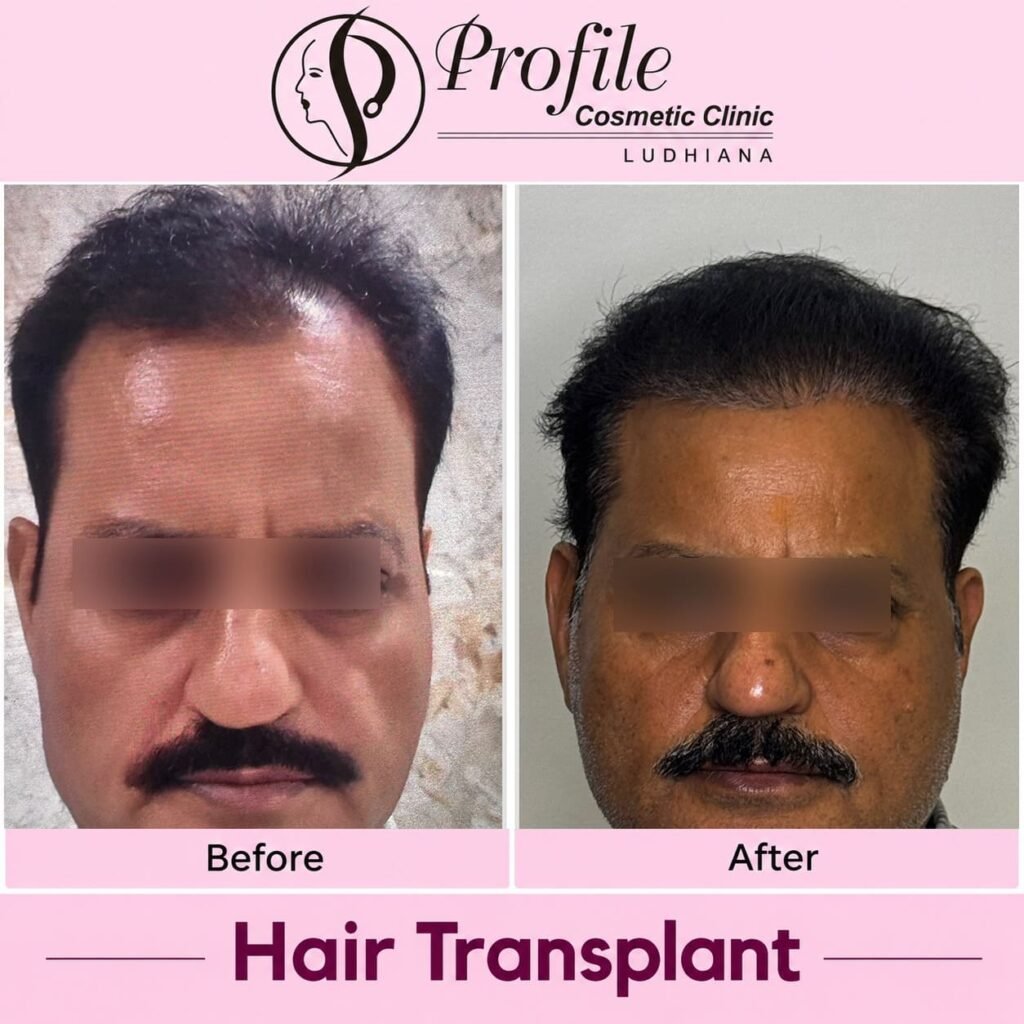
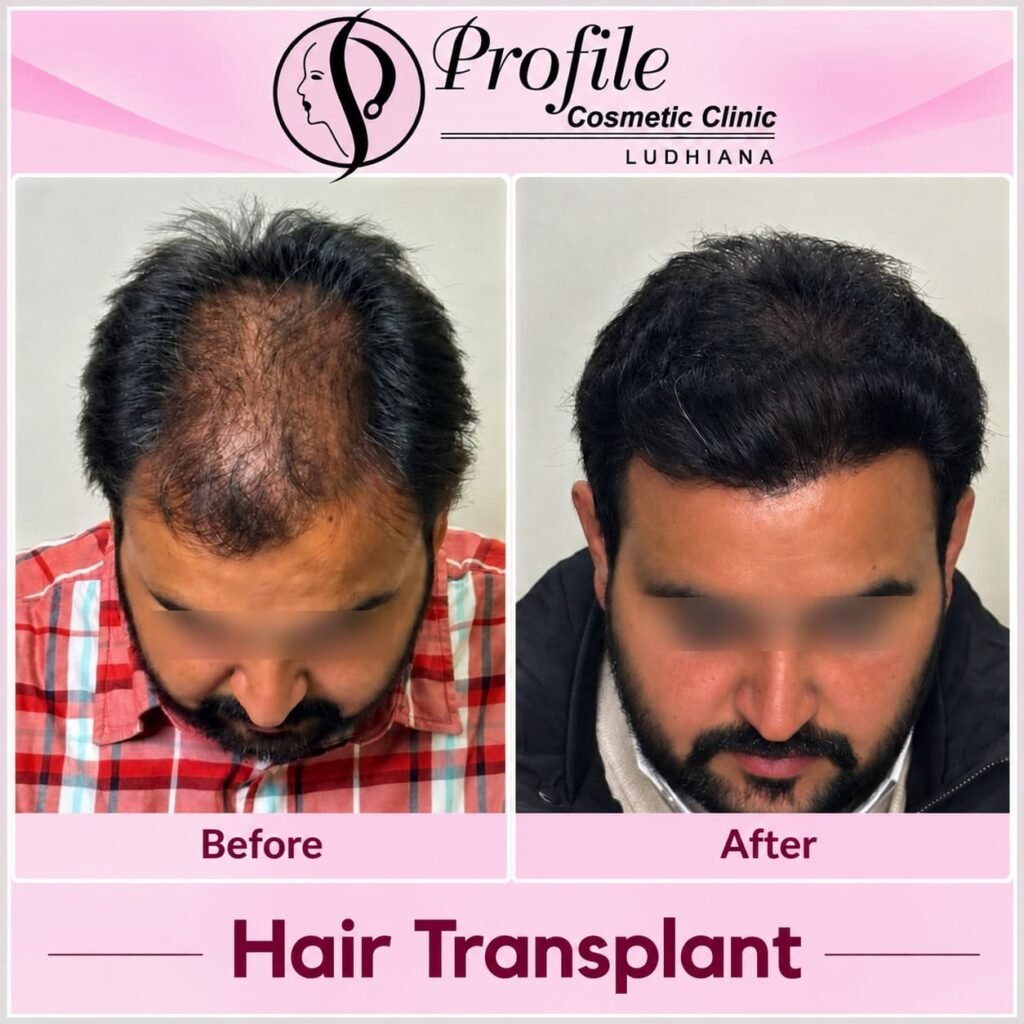


FAQ
Frequently Asked Questions About Hair Transplant in Ludhiana
1. What is Turkish hair transplant, and how is it different from traditional FUE?
Turkish hair transplant is a commonly used term for a hair restoration technique that combines Follicular Unit Extraction (FUE) with KEEP implantation. Since 2018, Dr. Vikas Gupta, a plastic surgeon at Profile Cosmetic Clinic, Ludhiana, has been offering this combined approach, focusing on patient comfort, precision, and hygiene during hair transplantation.
The technique combines three key steps.
- First, follicular units are harvested using a cordless, handheld FUE extractor with serrated punches.
- Second, recipient sites are created using sapphire tips, metal needles and conventional blades are not used for slit creation in this approach.
- Finally, hair follicles are implanted using KEEP implanters.
How Turkish Hair Transplant is better than conventional FUE ?
Turkish Hair Transplant is designed to minimise direct handling of the extracted grafts, supporting a no-touch implantation technique. It aims to promote careful graft handling and maintain high standards of procedural hygiene.
A key advantage is the focus on patient comfort throughout the procedure. Local anaesthesia is used to help manage discomfort, although individual experiences may vary.
At Profile Clinic, this technique is popularly referred to as Turkish Hair Transplant. The combination of FUE harvesting, sapphire slit creation, and KEEP implantation offers an integrated approach to hair restoration. Suitability depends on individual hair loss patterns, donor hair availability, and consultation with a qualified surgeon.
2. Is Hair Transplant Surgery Painful?
Hair transplant surgery is generally well tolerated and is performed under local anaesthesia, which numbs the treatment area. Patients may experience brief discomfort or a stinging sensation when the anaesthetic is administered.
At Profile Cosmetic Clinic, we use techniques intended to improve patient comfort during anaesthesia administration. Once the area is adequately anaesthetised, patients generally experience minimal pain during the procedure.
After surgery, mild soreness, tenderness, or discomfort may occur. Oral pain-relief medication may be prescribed as needed. The level of discomfort varies from person to person.
Our team explains the procedure and pain-management measures before surgery so that patients know what to expect.
2. What Is the Aftercare Required Following Hair Transplant Surgery?
Following hair transplant surgery, proper aftercare is essential to protect the newly transplanted grafts and support healing.
At Profile Cosmetic Clinic, patients receive individualised postoperative instructions, including:
- Avoid rubbing, scratching, pressing, or applying friction to the transplanted area.
- Follow the recommended sleeping and head-elevation instructions during the initial recovery period.
- Wear a loose-fitting cap or bandana only when permitted by your surgeon.
- Follow the prescribed scalp-cleaning and hair-washing routine.
- Avoid strenuous exercise, excessive sweating, and activities that may injure the scalp during the initial recovery period.
- Avoid smoking and alcohol during the period advised by your surgeon, commonly at least 7–10 days, depending on individual circumstances.
- Attend scheduled follow-up appointments to monitor healing and graft recovery.
Some patients develop temporary forehead or facial swelling after surgery. Your surgeon may demonstrate appropriate measures, such as gentle lymphatic massage, when indicated. Do not massage the transplanted area unless specifically instructed.
3. How Should I Wash My Hair After a Hair Transplant?
Hair washing after transplantation must be performed carefully to avoid disturbing the newly implanted grafts.
At Profile Cosmetic Clinic, patients are guided through the initial scalp-cleaning process by our clinical team. We recommend attending the clinic for supervised postoperative washing when advised, so that patients can learn the correct technique.
Our team explains how to apply shampoo, clean the scalp gently, rinse without excessive pressure, and dry the area safely.
General precautions include:
- Use only the shampoo and products recommended by your treating team.
- Avoid rubbing, scratching, or picking at scabs.
- Do not direct a strong stream of water onto the transplanted area during early healing.
- Avoid hot water and vigorous towel drying.
- Follow the specific instructions regarding when to begin washing and when to resume your regular hair-care routine.
For postoperative guidance, patients can contact our clinic at 9814457148 during working hours.
4. What Medicines Are Prescribed After Hair Transplant Surgery?
The medicines prescribed after hair transplant surgery depend on the patient’s medical history, the procedure performed, and the surgeon’s assessment.
At Profile Cosmetic Clinic, postoperative prescriptions may include:
- Pain-relief medication, if required.
- Antibiotics when clinically indicated.
- Other medicines or topical products when appropriate for the individual patient.
- Recommended hair-care products to help maintain scalp hygiene.
Transplanted hair follicles are generally taken from the patient’s own donor area, making the procedure an autologous tissue transplant. Unlike organ transplantation, it does not ordinarily require lifelong anti-rejection medication.
However, transplanted hair does not eliminate the possibility of further hair loss in the surrounding native hair. Some patients may benefit from medically appropriate treatments to manage ongoing hair loss.
Vitamins, minerals, and nutritional supplements should be recommended according to individual needs. They are not necessary for every patient and should not be considered a substitute for appropriate medical treatment.
5. When Do Hair Transplant Results Start Becoming Visible?
Hair transplant results develop gradually, and patience is important during recovery.
A typical timeline is:
- First 1–2 weeks: The scalp gradually heals. Temporary redness, swelling, crusting, and scab formation may occur.
- First few weeks: The transplanted hair shafts commonly shed. This is a normal part of the hair transplant cycle and does not necessarily mean that the grafts have failed.
- Around 3–4 months: Initial new hair growth may become noticeable in some patients.
- Around 6–9 months: Hair growth and visible coverage generally become more apparent.
- Around 9–12 months: Many patients can assess a substantial portion of their results.
- 12–18 months: Further maturation may occur, particularly in some areas of the scalp.
The timeline varies according to the individual, the transplanted area, graft characteristics, and healing response.
At Profile Cosmetic Clinic, the need for an additional transplant session is assessed after adequate healing and evaluation of the growth from the first procedure. A second session is generally not considered before one year unless an individual clinical assessment indicates otherwise.
6. Who Is a Suitable Candidate for Hair Transplant Surgery?
Hair transplant surgery may be suitable for individuals experiencing hair loss who want to improve hair coverage and have realistic expectations about the results.
A suitable candidate generally has:
- An adequate donor area with sufficient healthy hair follicles.
- A pattern and degree of hair loss that can be addressed surgically.
- Good general health or appropriately managed medical conditions.
- A clear understanding of the benefits, limitations, risks, and recovery process.
- Realistic expectations regarding density, hairline design, and the number of sessions that may be required.
A personal consultation is important before deciding on surgery. The surgeon should assess the cause and pattern of hair loss, donor-area quality, scalp condition, medical history, and expectations.
Hair transplantation may not be appropriate for every individual, particularly when hair loss is unstable, the donor supply is inadequate, or an underlying scalp or medical condition requires treatment first.
7. What Is the Cost of Hair Transplant Surgery in Ludhiana?
The cost of hair transplant surgery varies according to several factors, including:
1. Surgeon’s qualifications and experience: The surgeon’s specialist training, experience in hair restoration, and involvement in planning and performing the procedure are important considerations.
2. Clinic facilities and safety standards: Patients should consider the clinic’s medical supervision, hygiene, surgical facilities, emergency preparedness, and postoperative follow-up arrangements.
3. Who performs the procedure: Patients should clarify who examines them, designs the hairline, performs the surgical steps, and supervises the clinical team.
4. Number of grafts required: The extent of hair loss, available donor supply, desired coverage, and the estimated number of grafts affect the overall cost.
5. Surgical technique and treatment plan: The selected technique, complexity of the case, and services included in the package can influence the final price.
At Profile Cosmetic Clinic, Ludhiana, hair transplant packages typically start at approximately ₹50,000 and may extend to ₹2,00,000, depending on the clinical assessment, technique, graft requirements, and package inclusions. The final quotation is provided after consultation.
When comparing clinics, patients should look beyond the price and understand who will perform the surgery, what the package includes, and what follow-up care is available.
For consultation and an individualised estimate, call 9814457148.
8. When Can I Resume Exercise After Hair Transplant Surgery?
Physical activity should be resumed gradually to protect the scalp during early healing.
The following is a general guide; your surgeon’s instructions should take priority.
- First 24–48 hours: Rest and perform light daily activities as tolerated.
- First week: Avoid strenuous workouts, heavy lifting, activities that cause excessive sweating, and anything that could lead to accidental scalp injury.
- After approximately 7–14 days: Light exercise may be resumed when healing is satisfactory and your surgeon gives approval.
- After approximately 2–3 weeks: Many patients can gradually return to their usual exercise routine, depending on healing and the type of activity.
Contact sports, swimming, heavy weight training, and activities that expose the scalp to injury may require a longer restriction period.
Hair colouring, chemical treatments, hair gels, and regular haircuts should be resumed only when the scalp has healed sufficiently and your surgeon confirms that it is safe.
9. How Can I Recover Faster After Hair Transplant Surgery?
Following your surgeon’s instructions is the most important step in supporting a smooth recovery.
For appropriate postoperative care:
- Keep the scalp clean according to the prescribed washing instructions.
- Avoid touching, scratching, rubbing, or dislodging the transplanted grafts.
- Take prescribed medication as directed.
- Sleep in the recommended position during the initial recovery period.
- Avoid strenuous activity and excessive sweating until permitted.
- Follow your surgeon’s advice regarding cold compresses. If recommended, these should never be applied directly to the transplanted grafts.
- Maintain a balanced diet and adequate hydration.
- Avoid smoking and alcohol for the period recommended by your surgeon.
- Attend follow-up appointments and promptly report any unusual symptoms.
Recovery differs between patients. There is no guaranteed method of accelerating healing, and following instructions carefully is more important than using additional products or supplements without medical advice.
10. How Much Do Hair Transplant Surgeons Charge in Ludhiana?
Hair transplant prices in Ludhiana vary according to the surgeon’s qualifications, the number of grafts required, the technique used, clinic facilities, and postoperative services.
A quoted price may cover only the procedure or may include additional services such as consultation, medication, postoperative washing, and follow-up appointments.
At Profile Cosmetic Clinic, hair transplant treatment typically starts at approximately ₹50,000, with more extensive or complex procedures potentially costing up to ₹2,00,000. The final cost is determined after an individual assessment.
Before booking, ask for a clear breakdown of the total cost, the estimated graft requirement, the surgeon’s role, and the postoperative care included.
For further information, contact Profile Cosmetic Clinic, Ludhiana, at 9814457148.
11. Are Hair Transplant Results Permanent?
Hair transplantation can provide long-lasting results because transplanted follicles are generally taken from areas that are relatively resistant to androgenetic hair loss.
However, permanence is not guaranteed for every graft or every patient. Some transplanted hairs may not survive, and natural ageing or ongoing hair loss can affect the appearance of the scalp over time.
Hair transplantation also does not prevent future thinning of the non-transplanted hair. Your surgeon may recommend a long-term hair-loss management plan to help maintain the overall result.
The expected longevity of the result depends on donor-hair characteristics, the cause of hair loss, surgical planning, and individual factors.
12. What Are the Risks and Possible Side Effects of Hair Transplant Surgery?
Hair transplant surgery is a surgical procedure, and potential side effects and complications should be discussed before treatment.
Possible effects include:
- Temporary swelling, redness, tenderness, and crusting.
- Temporary shedding of transplanted hair.
- Itching or altered scalp sensation.
- Bleeding, infection, or delayed wound healing.
- Folliculitis or the development of small pimples.
- Scarring in the donor or recipient area.
- Uneven density, an unnatural-looking hairline, or an unsatisfactory cosmetic result.
- Shock loss, which refers to temporary or, occasionally, persistent loss of existing hair.
The likelihood and severity of these effects vary. A thorough consultation, appropriate surgical technique, sterile conditions, and postoperative care help manage risks but cannot eliminate them entirely.
Seek prompt medical assessment if you develop increasing pain, spreading redness, fever, pus, or other concerning symptoms after surgery.
13. How Long Does a Hair Transplant Procedure Take?
The duration of a hair transplant depends on the number of grafts required, the technique used, the complexity of the case, and individual factors.
A procedure may take several hours, and larger sessions can take most of the day. The exact duration is discussed during consultation after assessing the donor area and the treatment plan.
Patients should allow sufficient time for preparation, anaesthesia, the procedure itself, and postoperative instructions.
14. What Is the Difference Between FUE and FUT Hair Transplant Techniques?
FUE (Follicular Unit Extraction) involves removing individual follicular units from the donor area using specialised instruments. It generally leaves multiple small, dot-like scars.
FUT (Follicular Unit Transplantation) involves removing a strip of scalp from the donor area, from which follicular units are prepared for transplantation. It usually leaves a linear scar.
Both techniques can provide satisfactory results when appropriately selected and performed. The choice depends on donor-area characteristics, hair-loss pattern, hairstyle preferences, scarring considerations, and the surgeon’s assessment.
During consultation at Profile Cosmetic Clinic, the suitable technique and its benefits and limitations can be discussed for your individual case.
15. Can I Wear a Cap After Hair Transplant Surgery?
A loose-fitting cap may be permitted after the initial recovery period, depending on the technique used and the condition of the transplanted grafts.
At Profile Cosmetic Clinic, patients are advised when it is appropriate to wear a cap or bandana. Any headwear should be clean, loose, and easy to remove without rubbing or pressing against the recipient area.
Avoid tight caps, helmets, or other headwear that may exert pressure on the grafts until your surgeon confirms that they are safe to use.
16. Can I Undergo a Second Hair Transplant Session?
Some patients may require a second session to improve coverage, address further hair loss, or increase density. However, the decision depends on the outcome of the first procedure, donor-area availability, ongoing hair loss, and the patient’s expectations.
A second procedure should be considered only after adequate healing and assessment of the initial results. At Profile Cosmetic Clinic, additional transplantation is generally not considered before one year following the first procedure.
A consultation helps determine whether another session is appropriate and whether sufficient donor hair remains available.
17. How Do I Prepare for a Hair Transplant Consultation?
Before your consultation, prepare your medical history, current medication list, details of any previous hair-loss treatments, and information about the progression of your hair loss.
Your surgeon may assess:
- The pattern and extent of hair loss.
- The density and quality of the donor area.
- Scalp health and possible underlying causes of hair loss.
- General health and any relevant medical conditions.
- Your desired hairline, coverage, and expectations.
- The likely graft requirement, surgical options, risks, costs, and recovery plan.
Do not stop prescribed medication or start supplements without discussing them with your treating clinician.
A consultation allows you to make an informed decision about whether hair transplant surgery is appropriate for you.
Book a Hair Transplant Consultation in Ludhiana
Considering a hair transplant? Arrange a consultation at Profile Cosmetic Clinic to discuss your hair-loss concerns, donor-area suitability, treatment options, expected results, and individualised cost.
Call: 9814457148
Disclaimer: Hair transplant surgery is a medical procedure. Results, recovery, suitability, and costs vary between patients. A personal clinical assessment is required before treatment.
4,000 Grafts Hair Transplant in One Session: 200-Day Results of an Italian Patient at Profile Clinic, Ludhiana
[/vc_column_text][/vc_column][/vc_row][vc_row_inner el_class="services_wrap"][vc_column_inner width="1/3"][vc_single_image image="2389" img_size="large"][vc_single_image image="2392" img_size="large"][/vc_column_inner][vc_column_inner width="1/3"][vc_single_im...
Is hair transplant treatment painful? What does recovery feel like?
Since the 1950s we are seeing the era of hair transplant. It is one of those techniques which has gained worldwide importance. No doubt, undergoing the Hair Transplant in Punjab is one of the best solutions to save your hair locks. In addition, the Hair Transp...
